
Racket tip up: Improve timing on the overhead
No “backpack” on the overhead: With a compact preparation and a high racket tip, improve the timing of the reversal movement in a targeted way.
Racket tip up: Improve timing on the overhead Read More »

No “backpack” on the overhead: With a compact preparation and a high racket tip, improve the timing of the reversal movement in a targeted way.
Racket tip up: Improve timing on the overhead Read More »
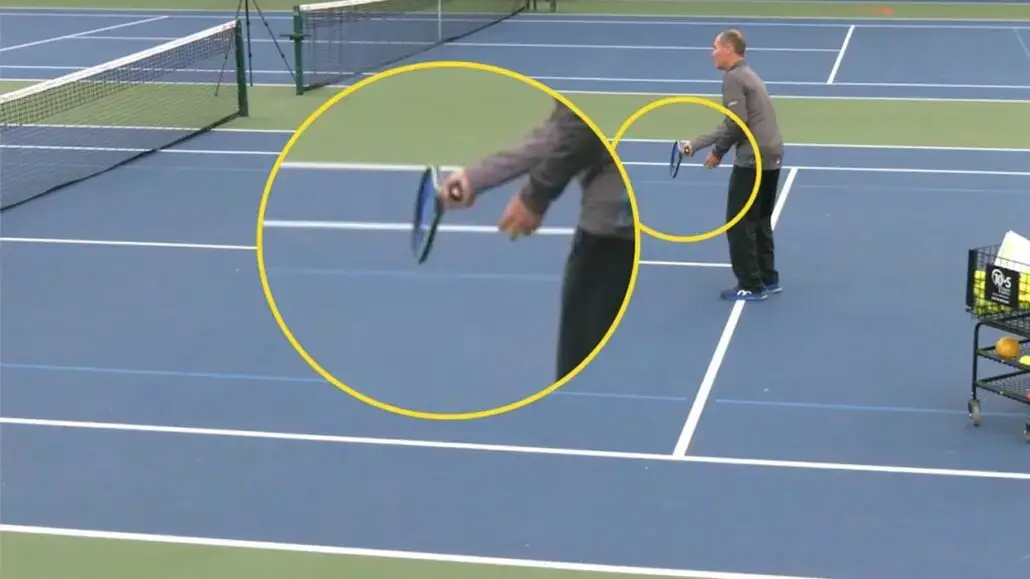
Achieving the ideal contact point in tennis is crucial for effective play. It involves understanding the contact point, ensuring proper body movement, and keeping the racket steady.
Finding the perfect contact point Read More »
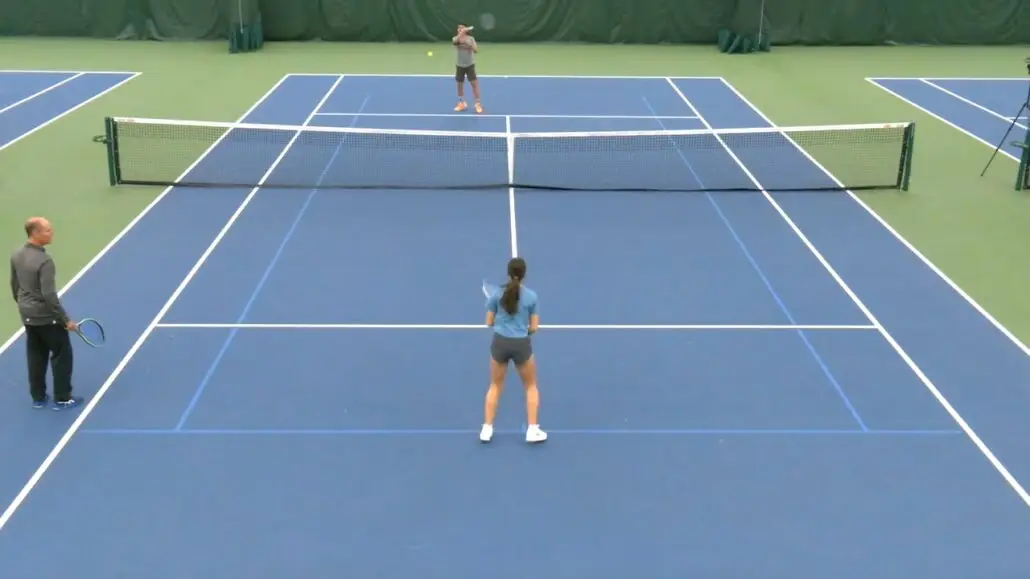
Understanding movement is essential in tennis. Players start on their toes, ready to react, using the split step for timing and positioning.
How to improve your on court movement Read More »

The video provides a comprehensive look at the drills featured in Level 1, designed for those who are new to the sport. These drills are thoughtfully organized to guide players step by step, starting from the basics and progressing towards initiating their first rally.
Level 1 – Starting to rally – [Duplicated] Read More »
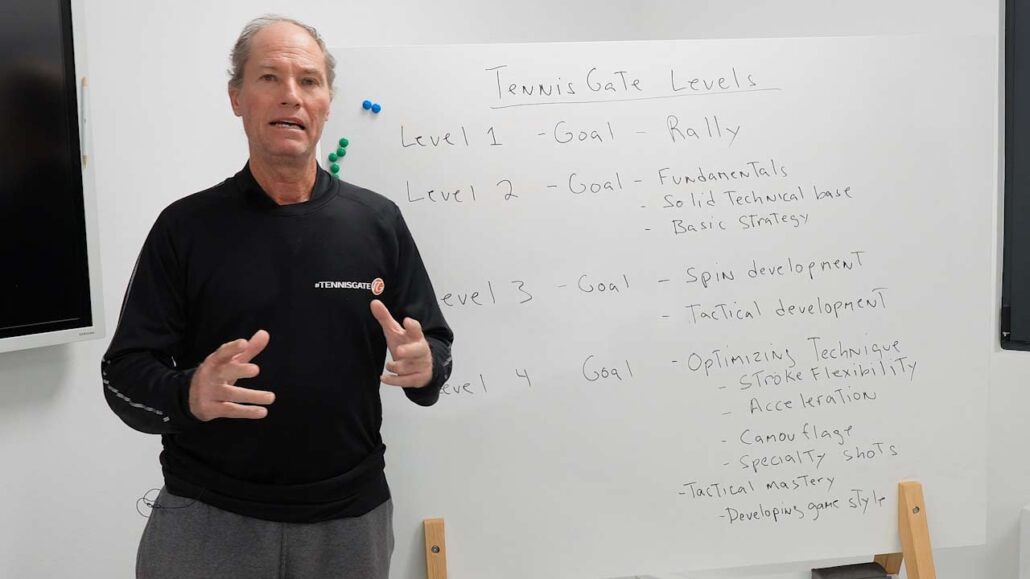
TennisGate’s 4 level player development system is the perfect blueprint to help coaches, players or parents achieve their goals.
TennisGate’s 4 Level System Read More »
The video provides a comprehensive look at the drills featured in Level 1, designed for those who are new to the sport. These drills are thoughtfully organized to guide players step by step, starting from the basics and progressing towards initiating their first rally.
Level 1 – Starting to rally Read More »
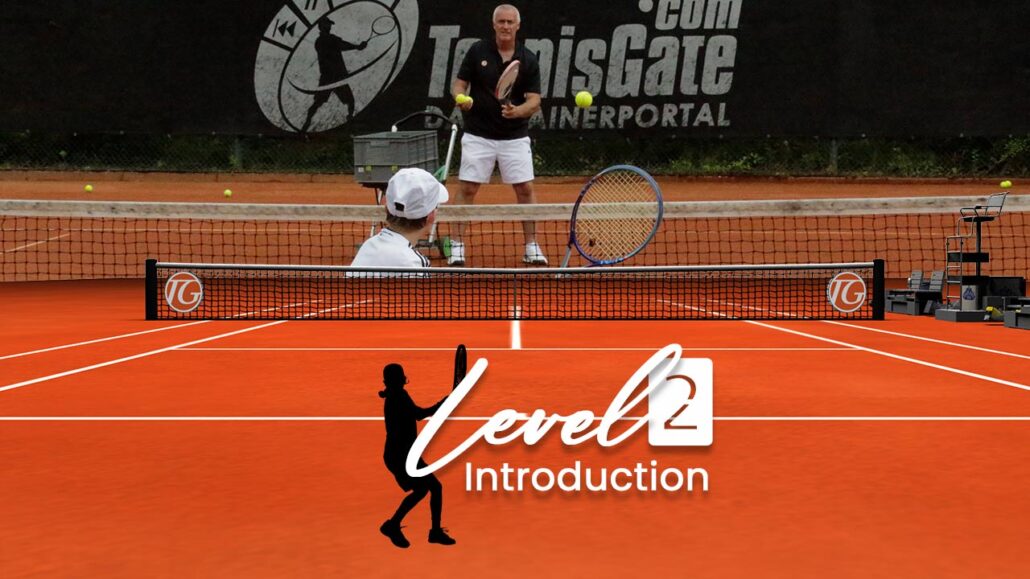
In Level 2 of our Player Development System, players will advance their skills in technical strokes and game basics. This includes mastering groundstrokes, volleys, overhead shots, and serves, all of which require different grips and swinging techniques.
Level 2 – Learn the fundamentals Read More »
The third level emphasizes consistency, groundstrokes, varying play heights, serving, and fundamental tactical concepts. It further elaborates on the techniques of slice and top spin, offering drills for practice. Actionable steps involve experimenting with these techniques, practicing near the net, and progressively retreating on the court.
Level 3 – Spin variations Read More »
The fourth level emphasizes the importance of optimizing the game both technically and tactically. This includes developing stroke flexibility and various types of shots. Players are encouraged to make tactical knowledge automatic and develop their unique game style.
Level 4 – Optimize your game Read More »
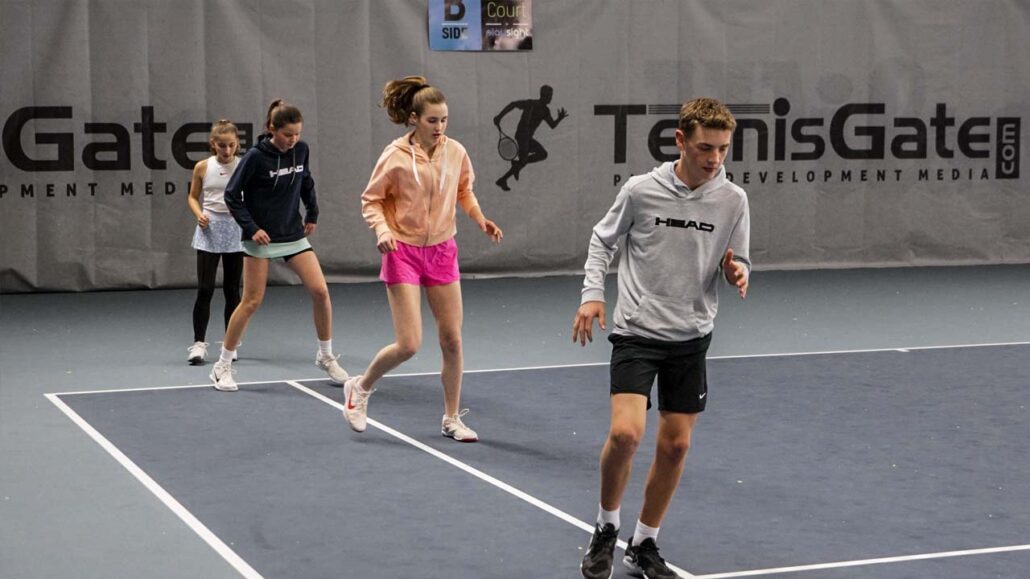
Our young players initially make three forefoot contacts on one side and progress towards the net with three additional contacts along the line. After allowing time for the athletes to settle, we introduce a cognitive challenge to the movement task.
Movement task with adding a sequence of numbers in increments of 6 Read More »
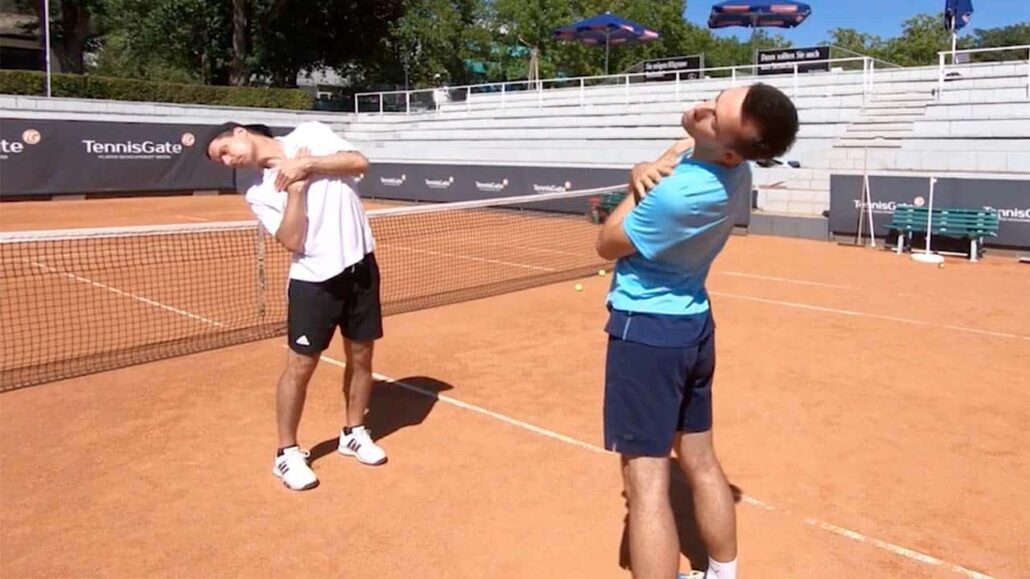
When mobilizing the upper body, the player takes care to keep the rest of the body stable.
Mobilize your spine Read More »
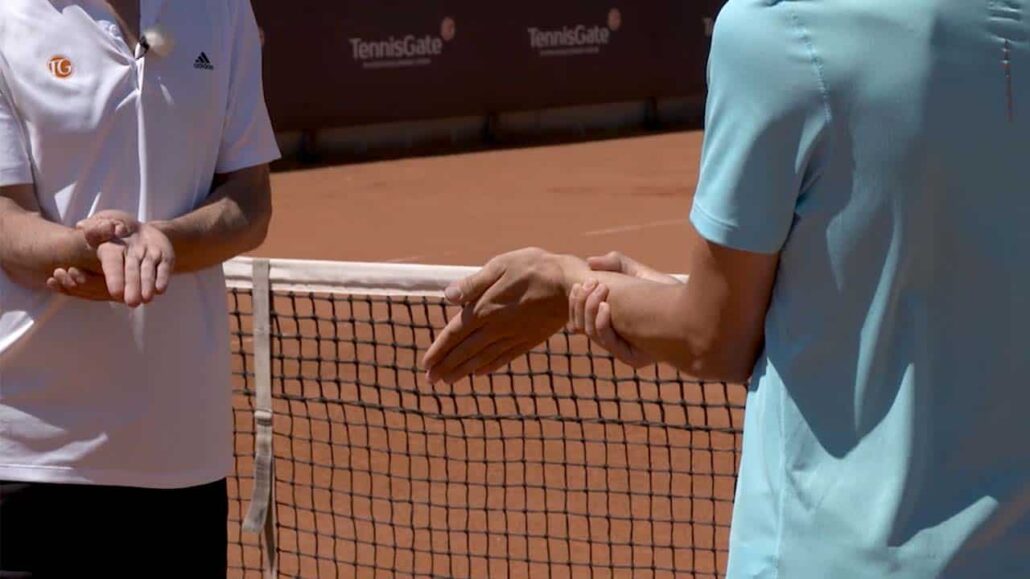
The player warms up his wrist before training. To do this, the forearm should remain stable. It is easier if the arm is held just before the joint.
Mobilize your wrist before training Read More »
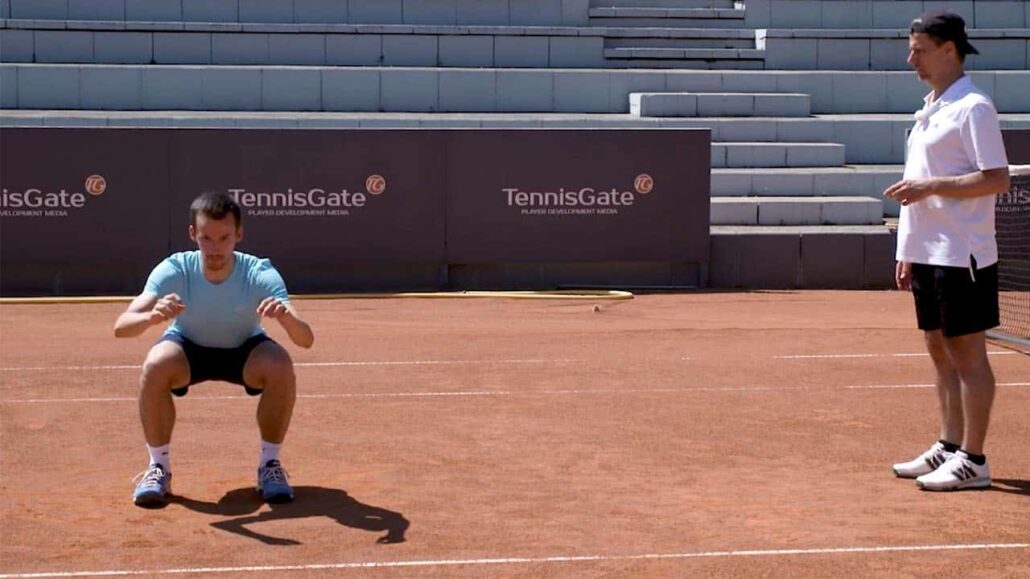
Take running in to the next level and activate neural strands through different movements and looks while running and bouncing.
Running in redefined with head movements and bouncing Read More »
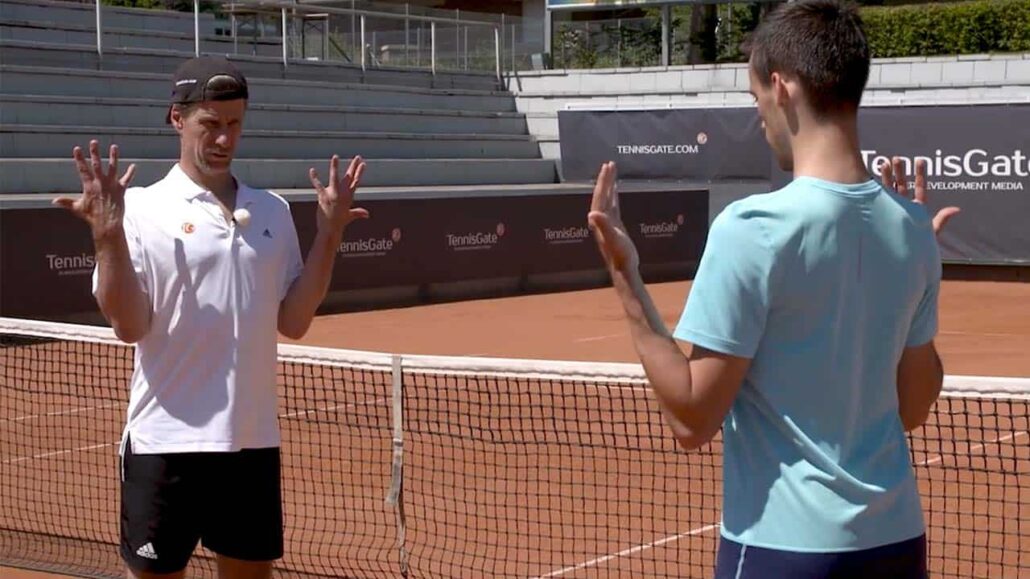
The player prepares his elbows before training.
Joint hygiene for the elbow Read More »
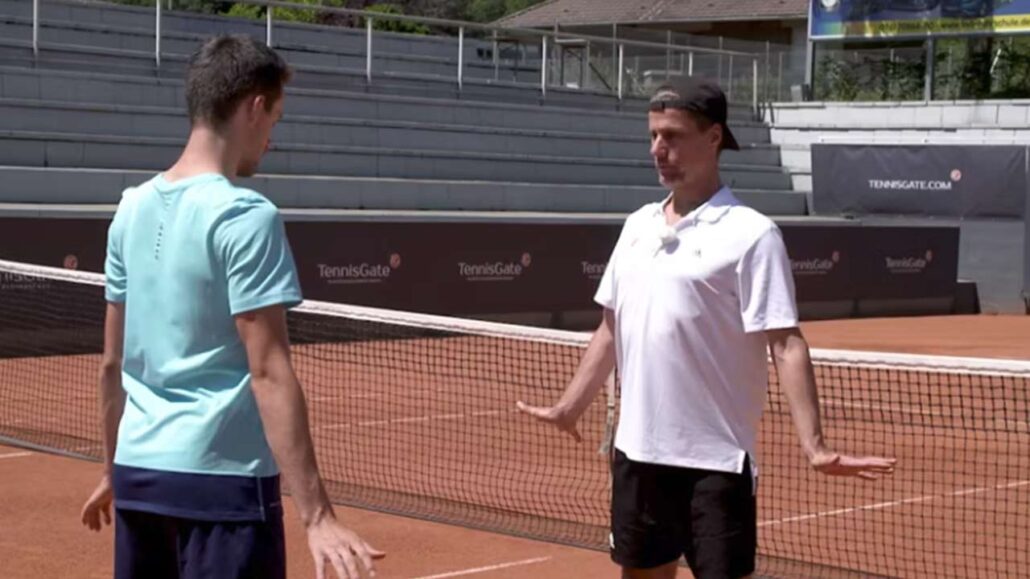
To stimulate the nervous structures between the head, arm and hand, the player performs the following exercise.
Stimulating nervous structures before playing Read More »
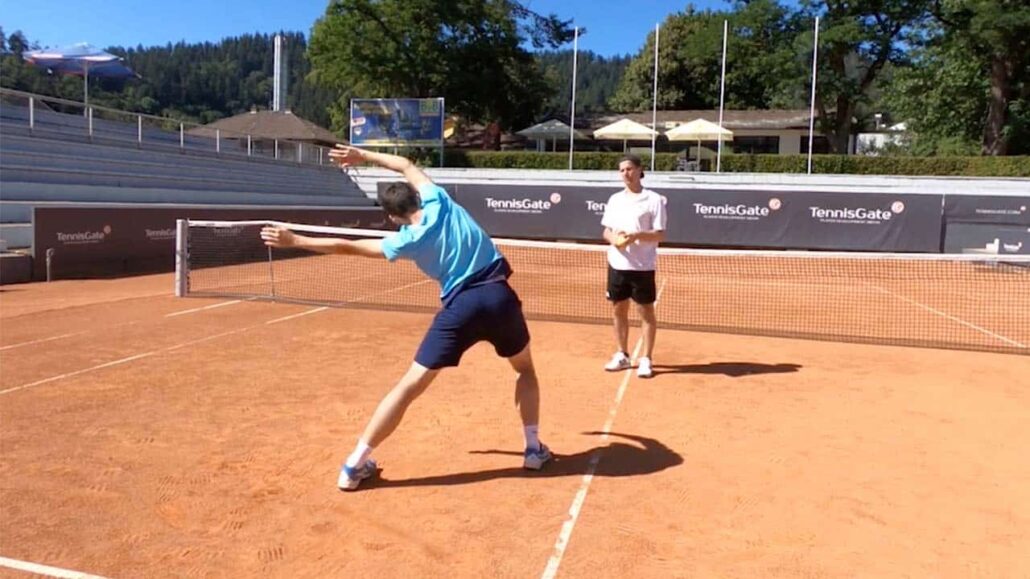
The movement patterns of the body are three-dimensional. With the following exercises in the frontal, sagittal and transversal planes, the tennis player prepares himself before training.
MoStabi: Whole body warm up in three planes Read More »
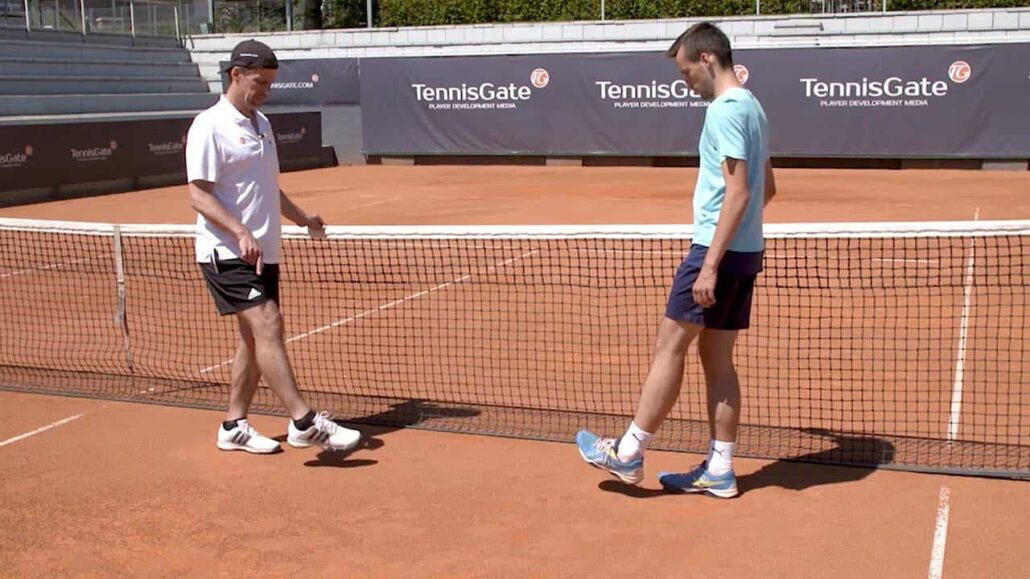
To protect the ankle joint from wear and tear, it is recommended to stimulate the joint fluid through gentle warm-up (before each workout).
Simple and effective: ankle circular warm-up Read More »
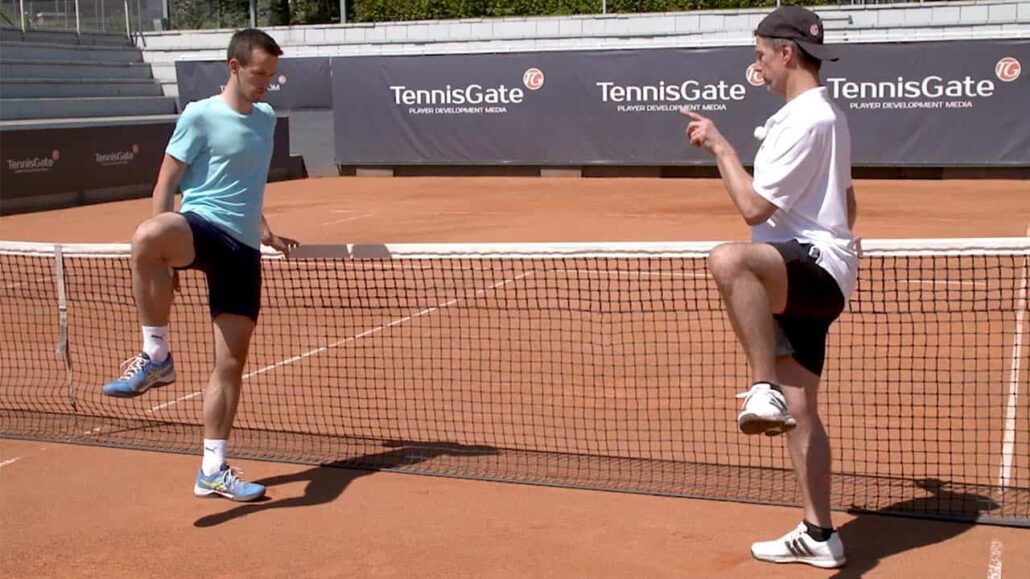
Cross the right leg, front over the left standing leg.
Raise the right leg (in external rotation of the thigh) as high as possible.
Mobilize your hip for better rotational ability Read More »
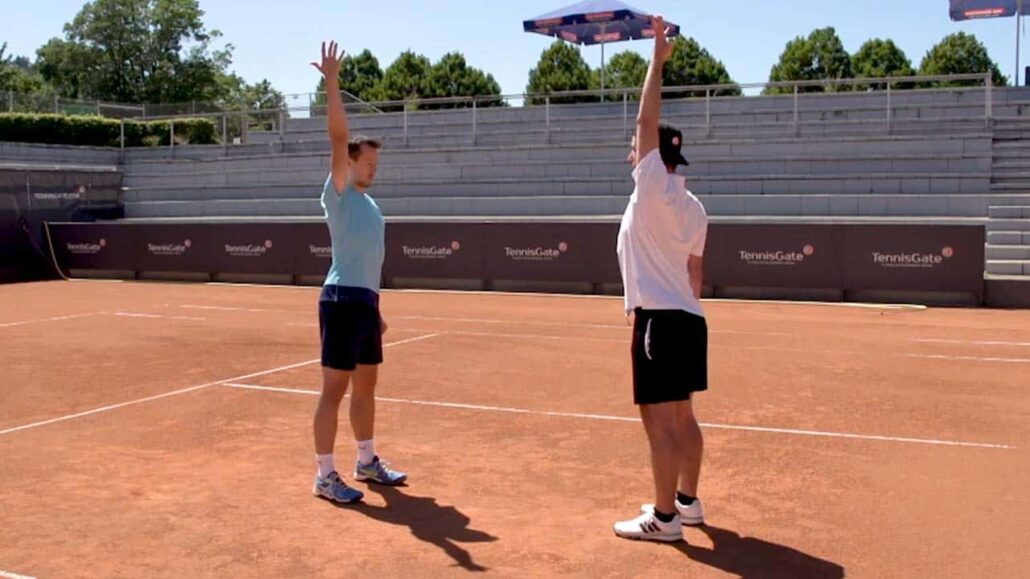
The player warms up his shoulder joint with circular movements. So that the body does not make any evasive movement, the player tenses the entire remaining body areas.
Prepare shoulder for training through arm rotation Read More »
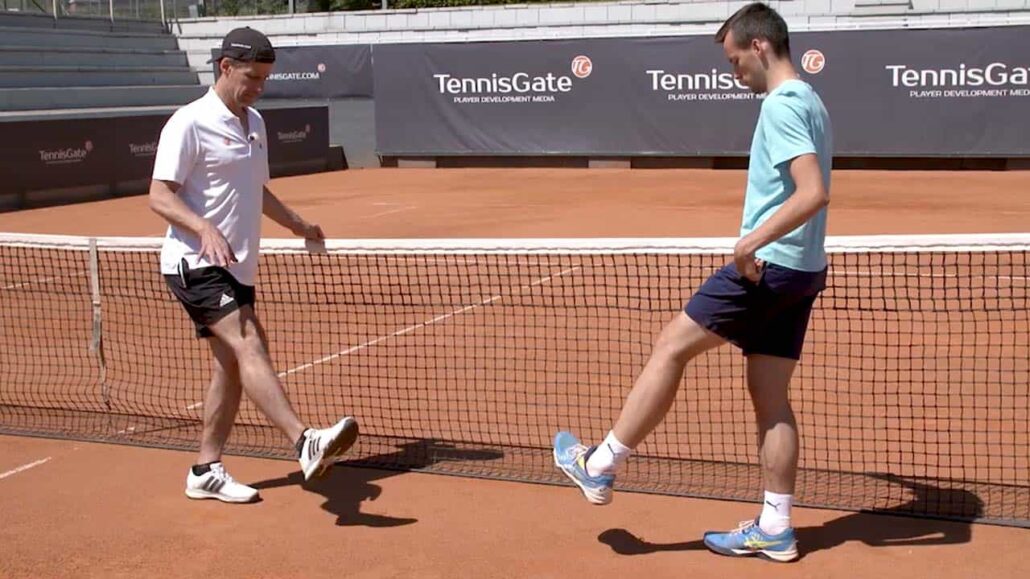
The player lifts the leg slightly off the ground and swings the leg loosely back and forth two or three times.
Preparing the knee joints for training Read More »
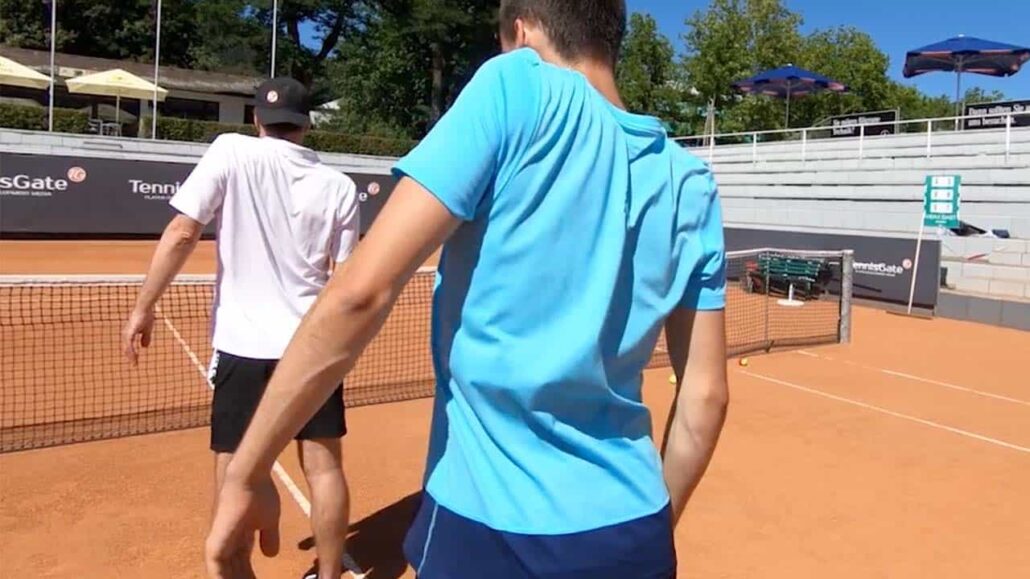
To warm up the scapula before the workout, the player raises the shoulder over the front and drops it down over the back.
Warm up your shoulder blade before training Read More »
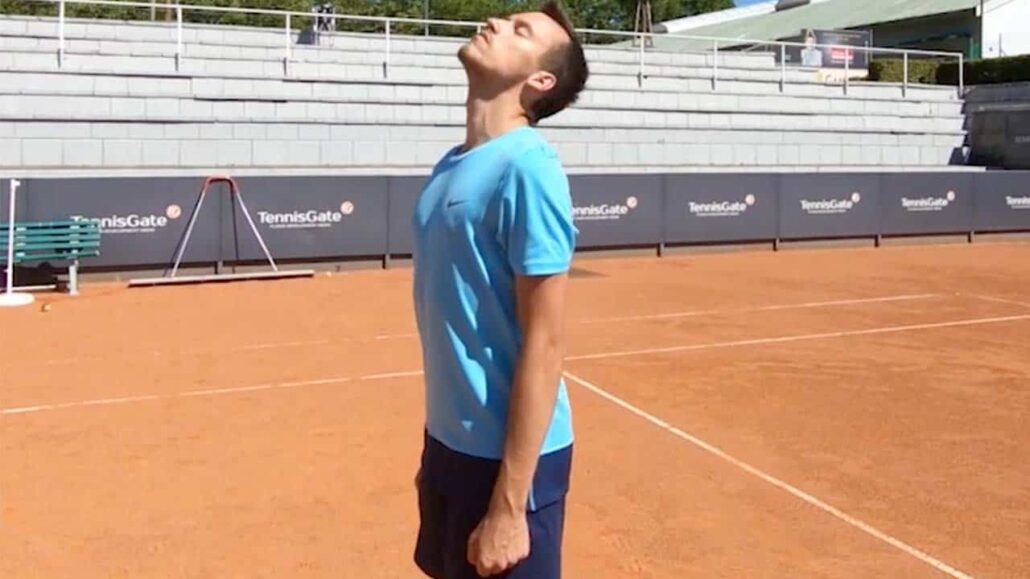
The movement should be performed in isolation. To do this, the player stands upright and tenses the body. Now only the head moves slowly forward and then to the side, creating a circular motion.
Mobilize your cervical spine with circles of the head Read More »
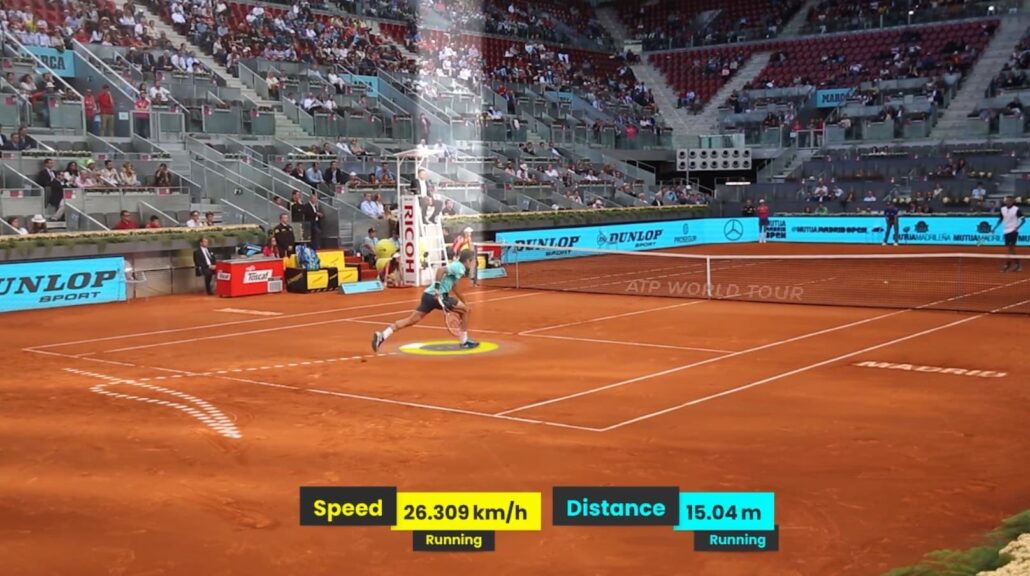
Why not put together some condi-drills for club training modeled after top player situations? From this VH catch situation with Roger, we’ll craft a simple tennis-specific running drill.
Footwork drill based on a specific match situation modeled by Federer Read More »
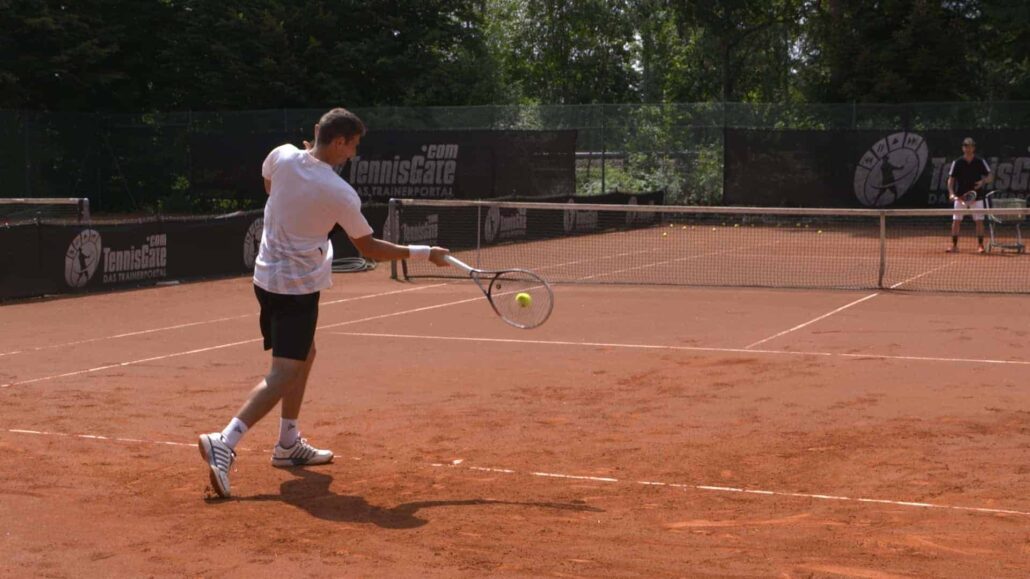
The forehand from the lateral position occurs in competition tennis in special situations. One of these situations, for example, is a ball that flies relatively centrally towards the player.
Forehand Closed Stance (back view) Read More »