
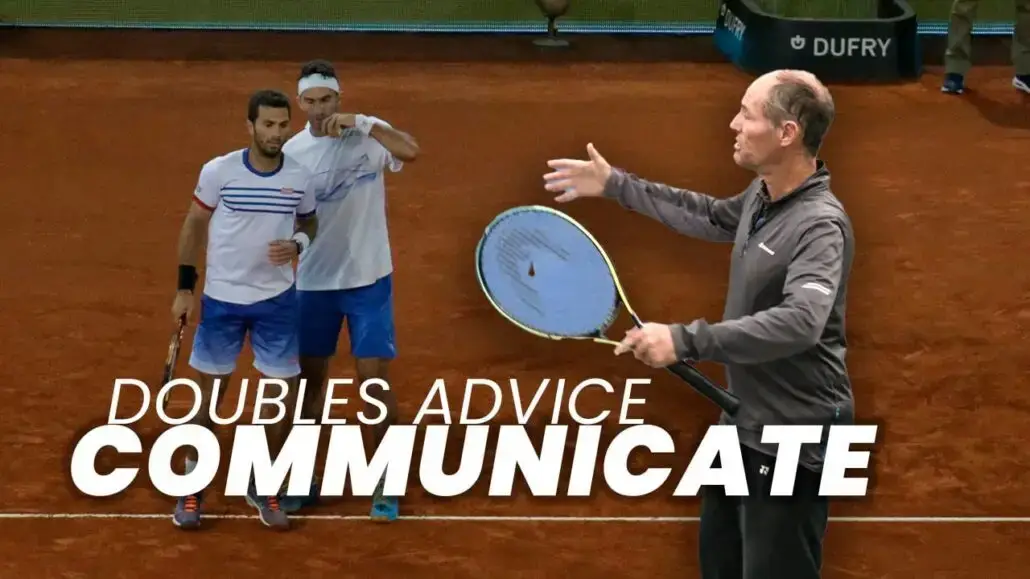
Communicate with your partner all the time
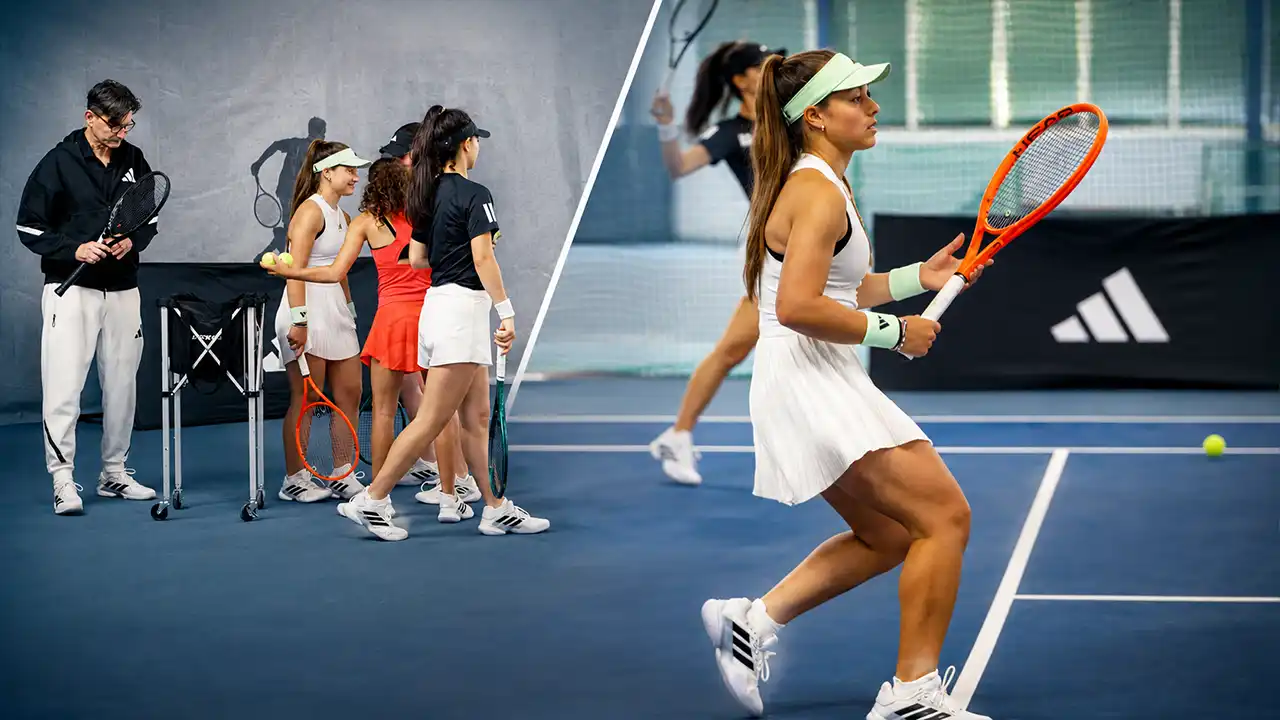
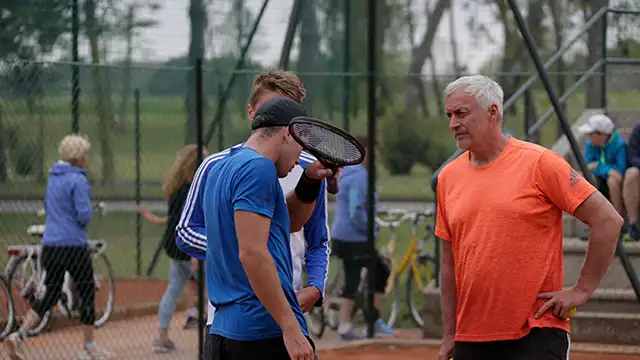
Effective communication during a point—such as signaling to “cover the alley” or “play defense”—helps you and your partner maintain better positioning.
Communicate with your partner all the time Read More »

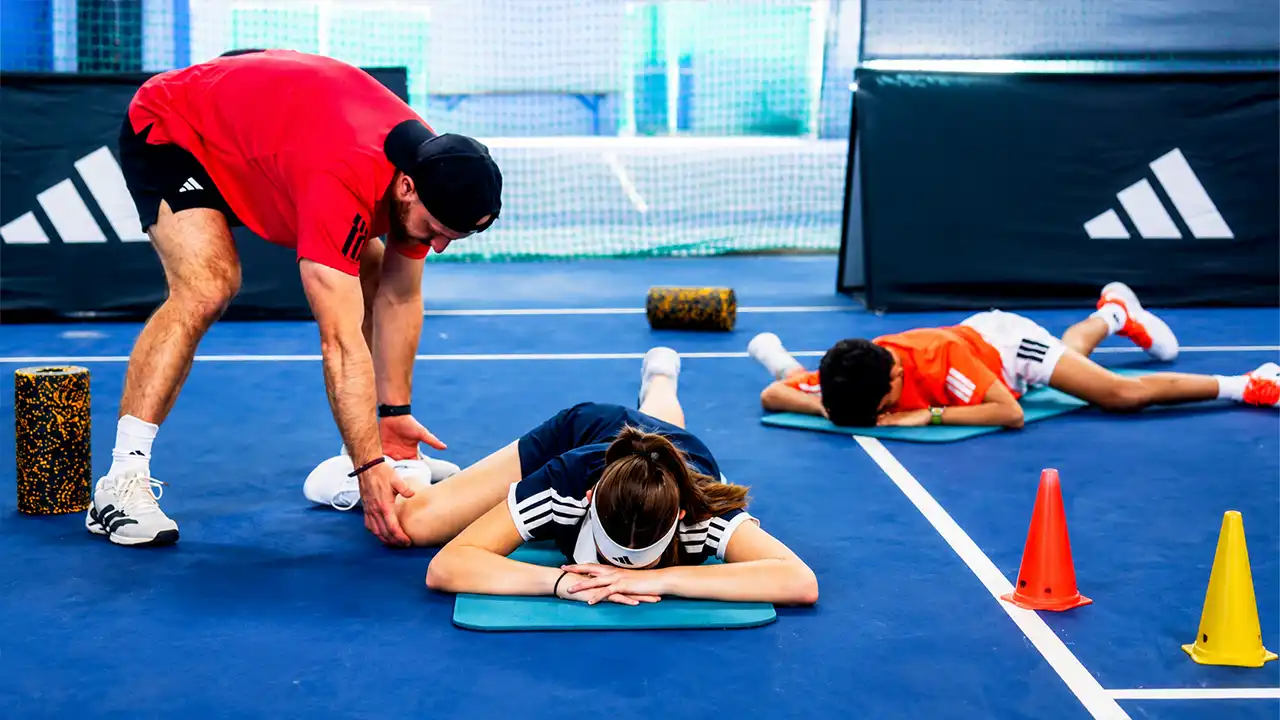
A simple mobility exercise for hip control, leg guidance, and stable lateral movements in tennis.
Mini tennis exercise for active push-off, better court coverage, and controlled footwork after every stroke.
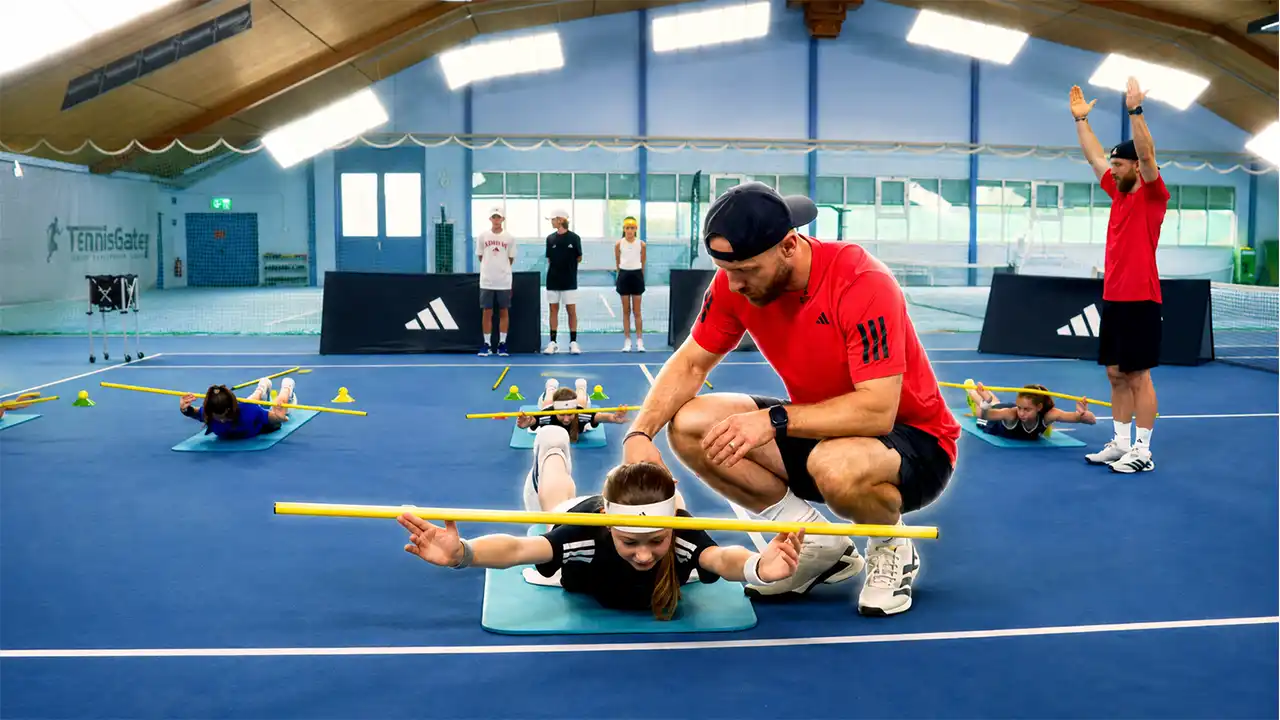
A simple mobility exercise for shoulder mobility, trunk control, and stable overhead movements in tennis.
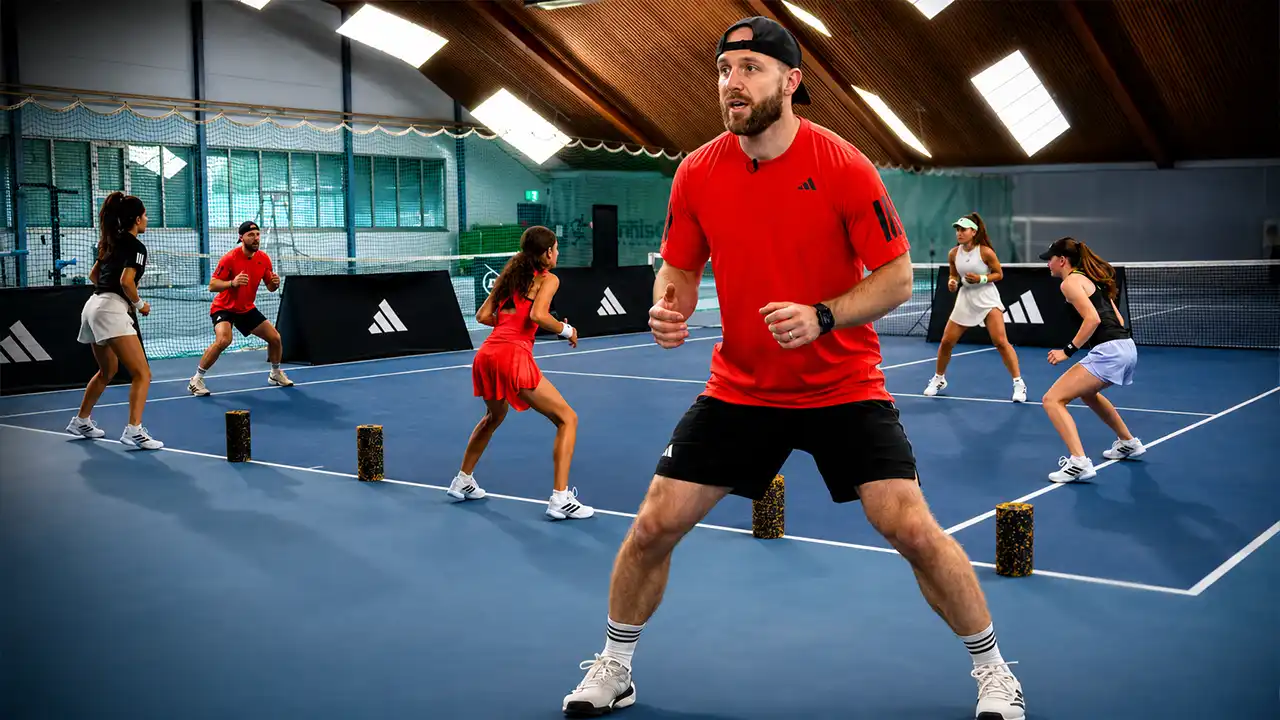
Wide jumps train stability, rhythm, and leg control as the basis for tennis-specific footwork.
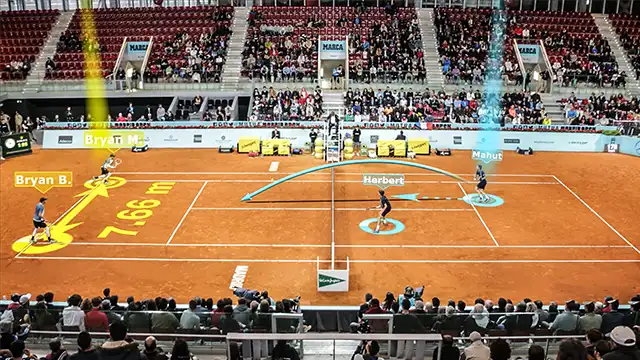
After a FH down-the-line shot, the player expects the opponent's response to land approximately 0.5 to 1 meter to the left of the center of the baseline.
Effective communication during a point—such as signaling to “cover the alley” or “play defense”—helps you and your partner maintain better positioning.
Communicate with your partner all the time Read More »

In doubles tennis, many players default to a “you mentality”—expecting their partner to take shots that aren’t clearly theirs. This mindset can lead to hesitation and missed opportunities, especially for balls near the center.

Maximize your doubles defense! Cover the center on mid-court shots and block the alley on sideline returns. Anticipate these common plays to save crucial points and dominate the court.
Short Middle – Short Down the Line Read More »

Stay agile in doubles! React to every shot with purposeful movement, adapting to each hit. Don’t stand still—continuous positioning keeps you ready and maximizes your court coverage.
Move Everytime Someone Hits the Ball Read More »

Unlock your game’s potential by reading your opponent’s patterns. Spot their favorite shots, anticipate moves, and gain the upper hand. Stay aware, adapt, and turn the match in your favor!
Cover the Opponents Patterns Read More »

Want to win more doubles points? Force your opponent to stretch, then move forward to seize easy shots. React to your own plays and watch your success on the court soar!
When Volleyer Stretch or Facing Low Ball – Move In Read More »
Effective communication during a point—such as signaling to “cover the alley” or “play defense”—helps you and your partner maintain better positioning.
Teach your players to communicate with ther partner all the time Read More »
In doubles tennis, many players default to a “you mentality”—expecting their partner to take shots that aren’t clearly theirs. This mindset can lead to hesitation and missed opportunities, especially for balls near the center.
Teach your players to think aggressively in doubles Read More »
Maximize your doubles defense! Cover the center on mid-court shots and block the alley on sideline returns. Anticipate these common plays to save crucial points and dominate the court.
Teach how to defend against short balls in doubles Read More »
Stay agile in doubles! React to every shot with purposeful movement, adapting to each hit. Don’t stand still—continuous positioning keeps you ready and maximizes your court coverage.
Coach players to move every time someone hits the ball in doubles Read More »

When playing teams that like to poach go down the line often at the beginning of the match. This will send a clear message to them to be careful about poaching.

The closer you play at the net, the easier it is to volley. First, you are more likely to get high volleys that you can attack and secondly, it will be easier to cover the lateral shots because you are cutting off the angles.
Play as Close to the Net as Possible until the Opponent Challenges you with Lobs Read More »

Although the doubles game has changed recently and more players are playing from the backcourt, it is still a volley game.
Volley Deep Cross Court Until you Get a Ball that You can Attack Read More »

When at the net in doubles angle the short lobs and hit deep lobs through the middle or at the opponent’s feet.
Angle Short Lobs and Hit Deep Lobs Through the Middle Read More »

When one of the players gets lobbed, the ideal outcome is for that player to hit an overhead. However, if the lob is too deep, the player reacting first should probably get it.
If your Partner Gets Lobbed it May be Easier for you to Play the Next Shot Read More »

Doubles is a game of percentages. The winning team is not the one hitting the best shots but the one hitting the solid shots over and over.
Be Consistent as you Start the Point Read More »

When at the net with your partner back there are two schools of though: Some coaches think players should never look back, other coaches think players should look back.

When playing one up and one back against the same formation, both net players need to be constantly moving up and back from offense to defense as the ball moves from one side of the net to the other.
When at the Net Move with the Ball Read More »

If you get passed by a lob, both you and your partner need to run back and play defense.
Play a High defensive Lob if you get Passed by a Lob Read More »

A frequent mistake when playing two at the net against two at the back is for the players at the net to try to hit forcing shots like drop shots or angles too early allowing the opponents at the baseline to attack the net or use angles.

Most players know the importance of communicating with their partners after every point. However, most players do not do as good of a job communicating during the points.
Do not Forget to Communicate with your Partner During the Point Read More »

Great doubles teams are always communicating – during points, between points and on the change-overs. Make sure you are constantly communicating with your partners.
Ongoing Communication is the Key to a Good Doubles Team Read More »

Many players make the mistake of trying to hit through two players at the net when facing a low volley. This usually results in an easy high volley for the opponents.
Take Some Pace off When Facing a Low Volley Against two Players at the Net Read More »

When at the baseline it is very tempting to try to hit “bullets” against two players at the net.