
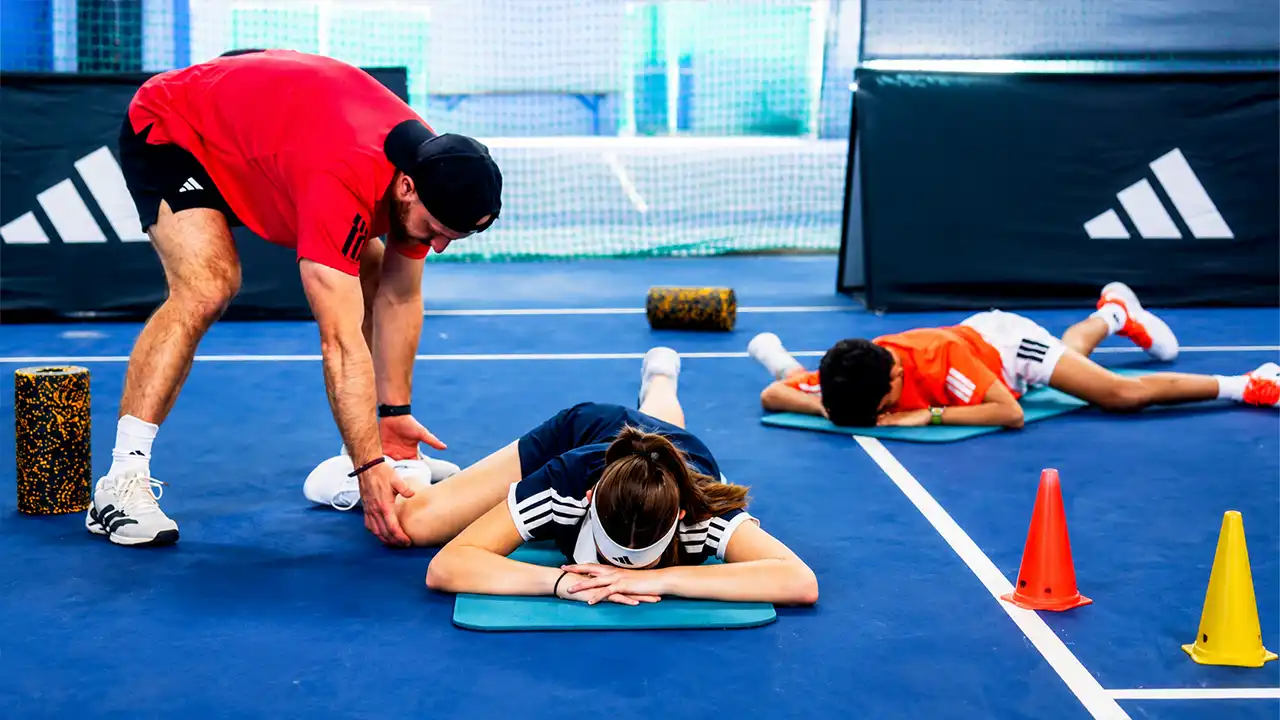
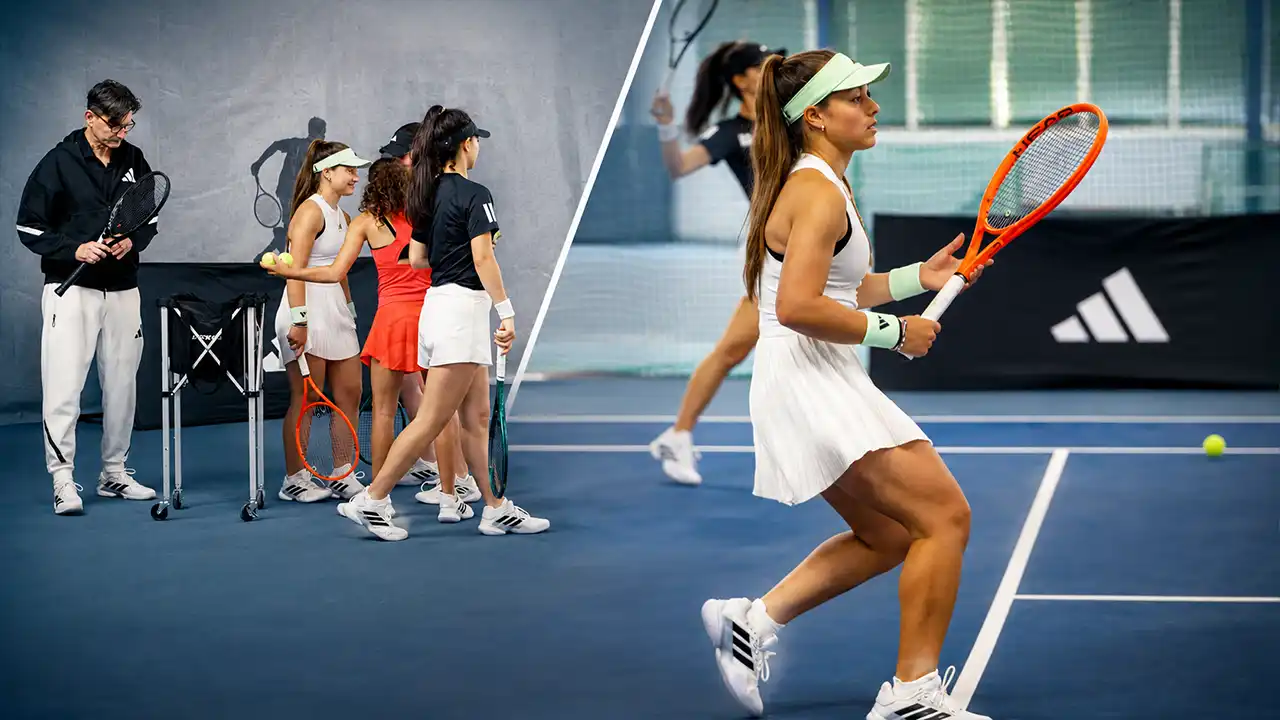

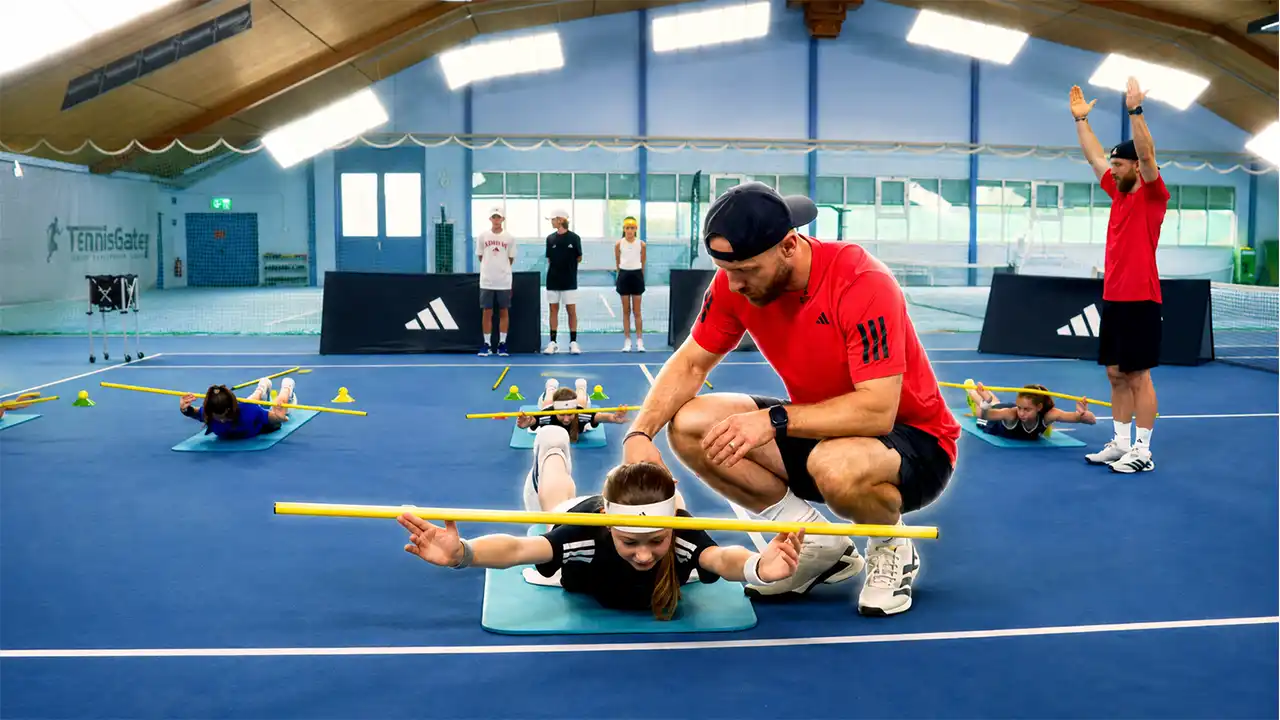

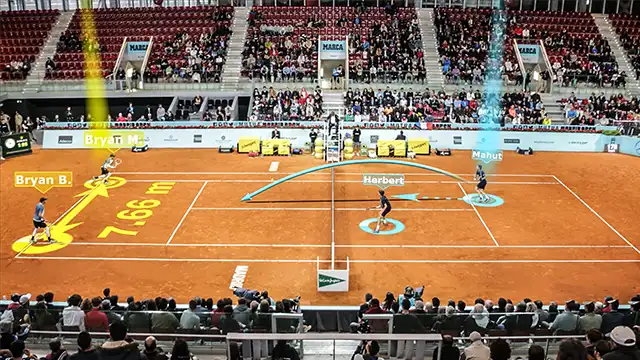
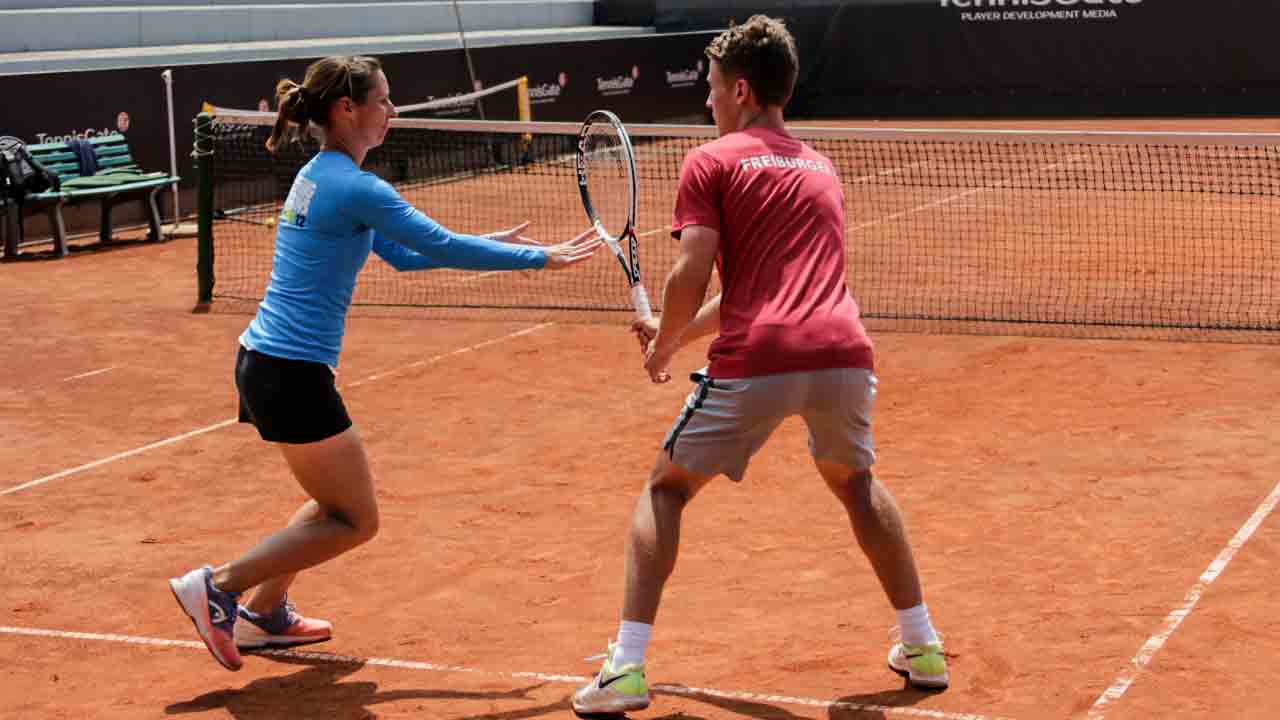
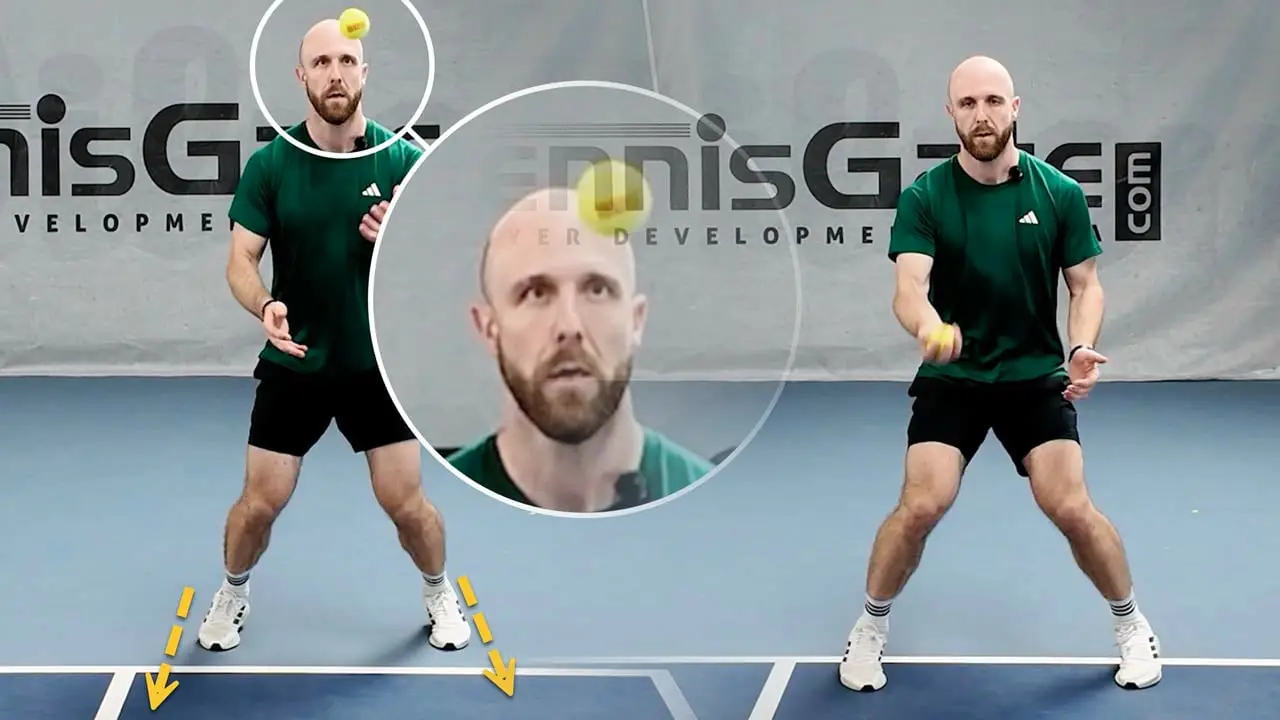
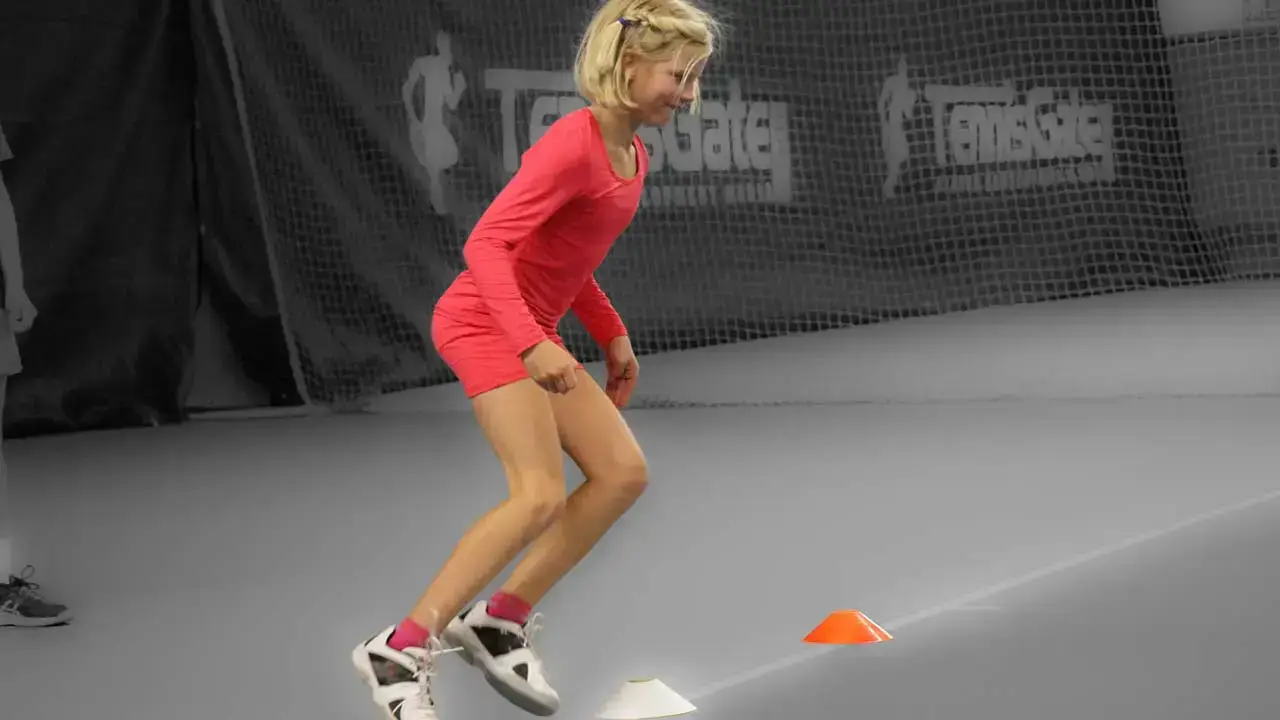
The players start in a wide, low ready position. The feet are stable on the ground, the body center of mass is lowered, and the arms move along loosely. At the beginning, the goal is not to jump as high or as far as possible, but to build a stable starting position and keep the rhythm under control.
A marking on the ground serves as orientation. It shows whether the players maintain their position or move uncontrollably forward, backward, or to the side during the movement. At first, they stay in the wide position for about 15 seconds and build depth. The movement should look light and rhythmic, even though it can be quite demanding.
Next, small, wide jumps are performed in rhythm. The players stay low, keep the width, and let the arms help. The heels stay controlled, the body remains stable. Only when stability and rhythm are present can the pace be increased slightly.
In the next variation, forward and backward movement over a line is added. The players jump staggered forward and back, but still keep the wide position and the even rhythm. Here too, the rule is: only increase pace if stability and rhythm are maintained.
Transfer to Tennis
In tennis, many movements start from a low, wide, and stable position. Especially on the split step, on short adjustment steps, on changes of direction, and on the start to the ball, it is crucial that the body works not only fast, but also in a controlled way.
This exercise trains exactly this foundation: the players learn to work elastically from a wide position, control the body center of mass, and keep an even rhythm. That is especially important in tennis, because footwork does not consist of single isolated jumps, but of repeatable rhythmic movements.
Rhythm helps stabilize the ready position. Anyone who accelerates too early often loses width, stands up too much, or lands unstably. In tennis, that means the next step comes too late or too untidy. That is why stability comes first in this exercise. Only when the position stays secure does the movement become faster or more complex.
The forward and backward movement over the line transfers to typical tennis situations: forward to a short ball, back to the starting position, small corrections before the contact point, or re-centering after the stroke. The players learn to change their position rhythmically without losing core tension and balance.
Training Goal
The goal of the exercise is to improve stability, rhythm, and leg coordination in a wide, low position. The players should learn to control the body center of mass while working elastically over the ground.
The exercise develops important basics for tennis-specific footwork:
- stable wide ready position
- rhythmic footwork
- control of the body center of mass
- elastic bouncing from a low position
- clean landing and readiness to push off again
- preparation for split step, change of direction, and adjustment steps
Load Management
Short load times are suitable for getting started. The movement should stay clean and rhythmic.
Recommendation:
- 2–4 rounds
- 10–15 seconds of load per round
- 20–40 seconds rest
- initially without pace pressure
- increase pace only if stability and rhythm are maintained
For younger players, a short load duration is enough. If the quality drops, the players get too high, or they lose the rhythm, the exercise should be paused or simplified.
Possible Corrections
The player stands up too much:
Build more depth again. The body center of mass stays low, the knees remain slightly bent.
The wide position is lost:
Stay wider. The feet should not keep coming closer together, but should maintain the stable starting width.
The movement becomes hectic:
Reduce pace. First find the rhythm again, then increase slowly.
The landing is unstable:
Choose smaller jumps. The player should land quietly, controlled, and stable.
The arms do not move along:
Let the arms come along loosely. They support the rhythm and help with balance.
The player jumps too high:
Keep the movement flatter. The goal is not maximum jump height, but rhythmic stability.
The player leaves the marking uncontrollably:
Use the marking as a reference. The player should be able to recognize whether they can control their position.
During the forward/backward movement, width is lost:
Work again in the basic variation first. Then perform the movement over the line smaller and more controlled.
Coaching Keys
- First stability, then rhythm.
- Stay wide.
- Stay low.
- Arms move along loosely.
- Do not jump as high as possible.
- Rhythm means: stay even, stay even.
- Use the marking as a reference.
- Work lightly and in control.
- Only increase pace if the movement stays stable.
- Move forward and back without losing the basic position.
Progressive Execution: from easy to hard
1. Hold the wide position
The players stand wide and low on the marking. They hold the position for about 15 seconds and check whether they stay stable.
2. Light bouncing in a low position
From the wide position, the players begin to bounce lightly. The feet stay stable, the body stays low.
3. Small wide jumps on the spot
The players jump rhythmically in the wide position. The jumps stay small, relaxed, and controlled.
4. Stabilize the rhythm
The players keep an even rhythm. The focus is on not getting faster before the movement stays stable.
5. Increase pace slightly
When stability and rhythm are secure, the pace can be increased a little. The movement still stays controlled.
6. Forward and back over a line
The players jump staggered forward and back over a line. The wide position is maintained, and the arms move along.
7. Forward/backward movement with more rhythm pressure
The movement is performed a little faster. The prerequisite is that the players still stay low, wide, and stable.
8. Tennis-specific application
The exercise can be linked to an acoustic or visual signal. On the signal, the players react out of the rhythmic movement in one direction. This creates a connection to split step, reaction, and starting movement in tennis.