
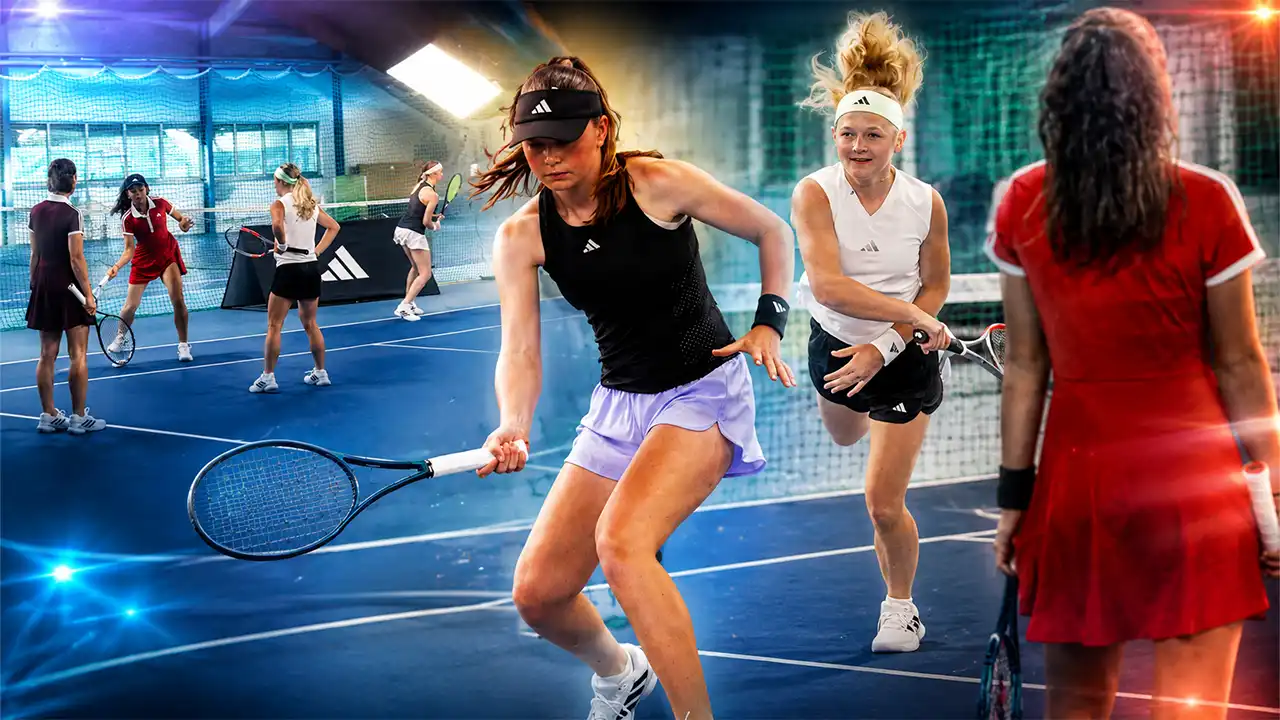
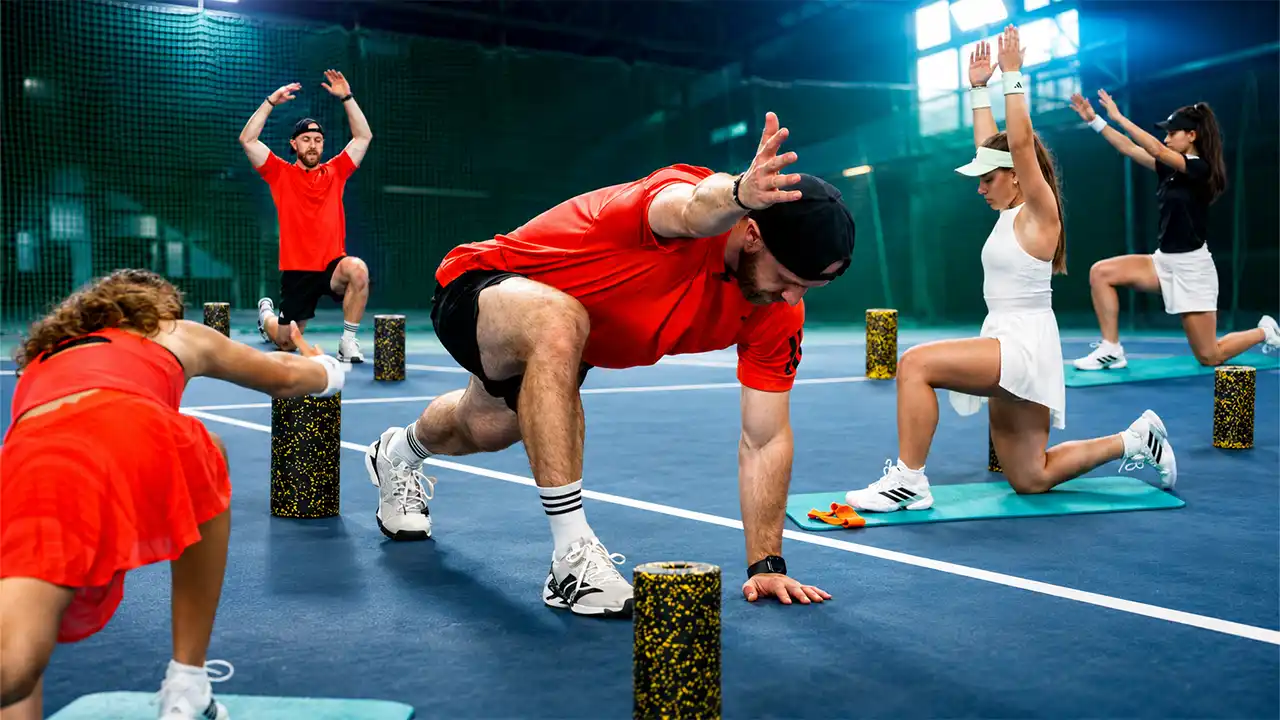
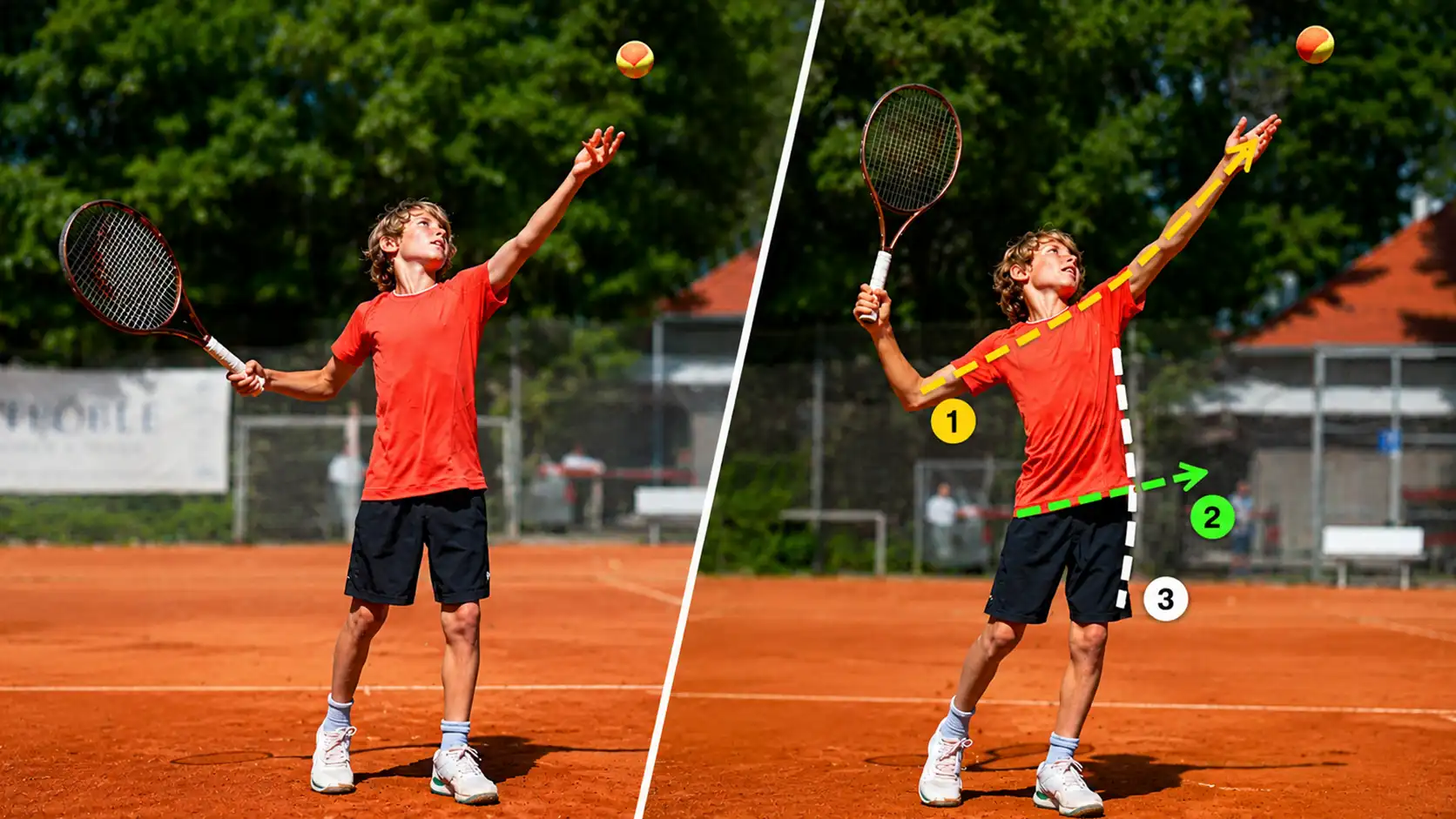
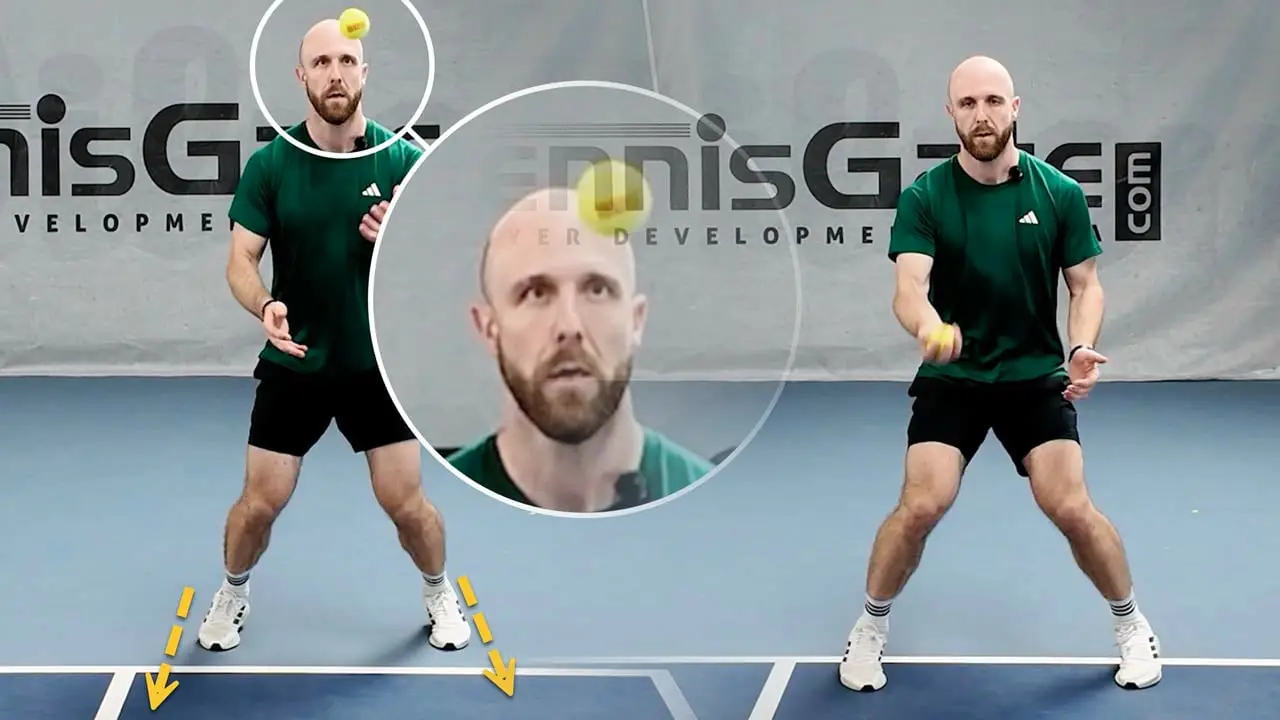
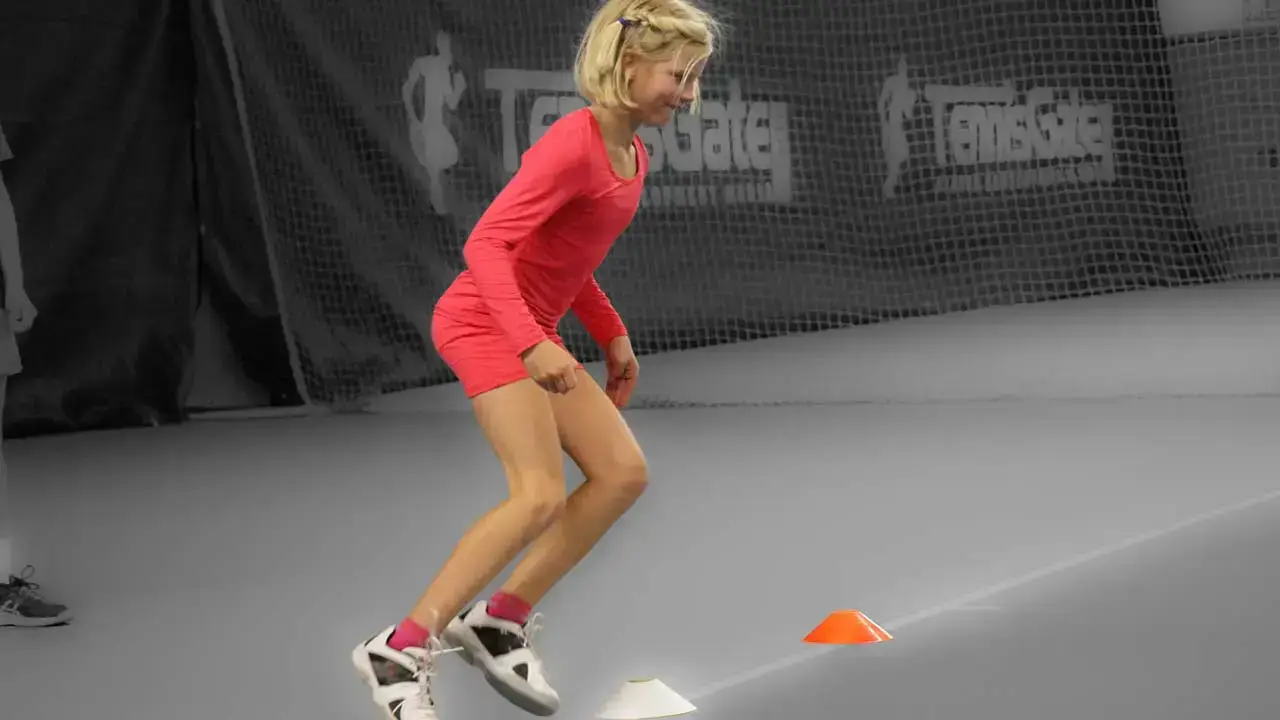
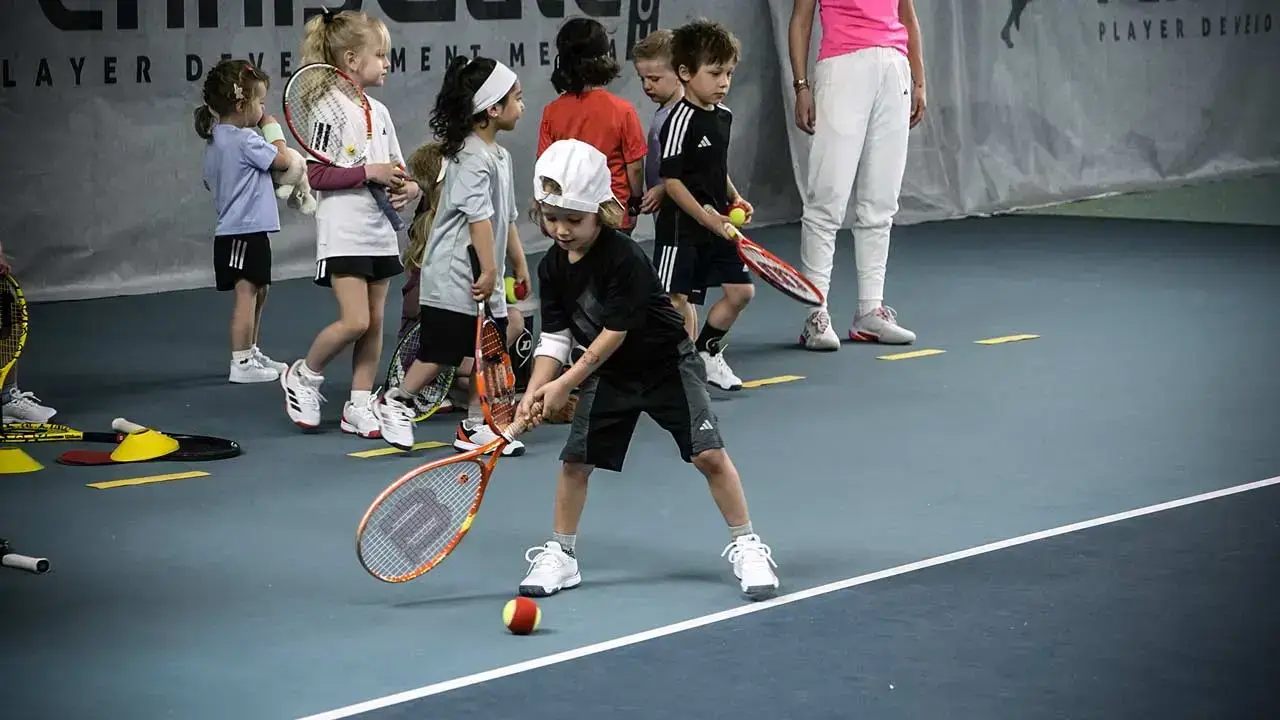
In this exercise, the players keep moving continuously with quick, small foot contacts on the spot. This basic movement forms the foundation of the exercise: the feet stay active, the center of gravity is slightly lowered, and the players are alert and ready for the next action.
On an acoustic command, they simulate a specific tennis stroke without a ball. After each movement, they immediately return to the quick foot contacts. So the exercise combines footwork, reaction ability, and mental preparation for specific stroke patterns.
The commands can be structured like this, for example:
1 = Forehand
2 = Backhand
3 = Forehand volley
4 = Backhand volley
5 = Overhead
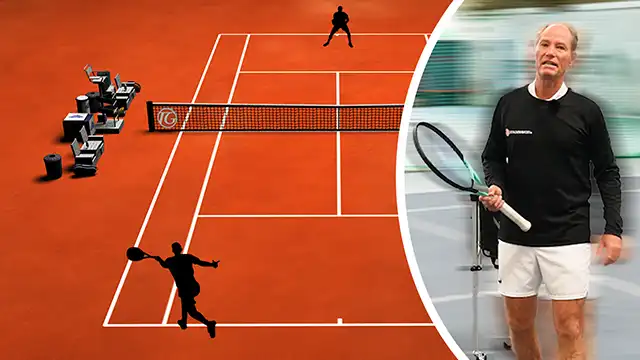
The coach or a partner calls out the numbers in changing order. The player has to recognize the command quickly, execute the matching stroke as a shadow stroke, and then immediately return to active footwork.
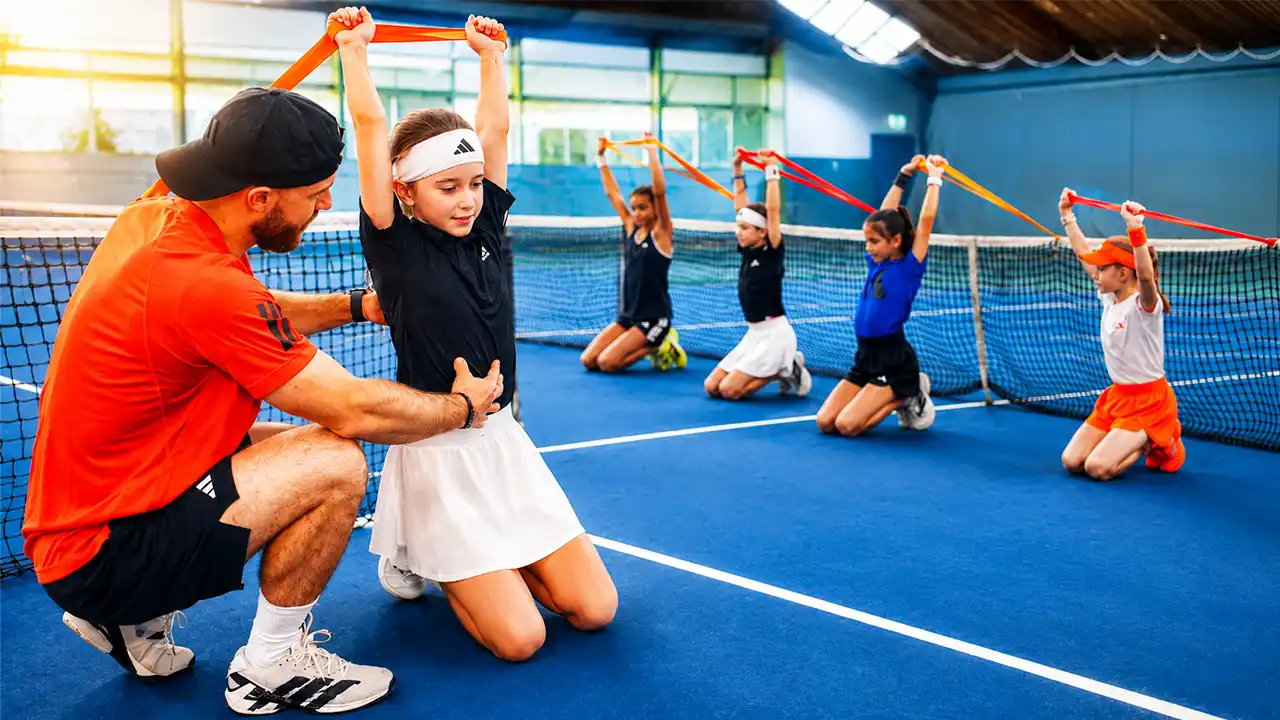
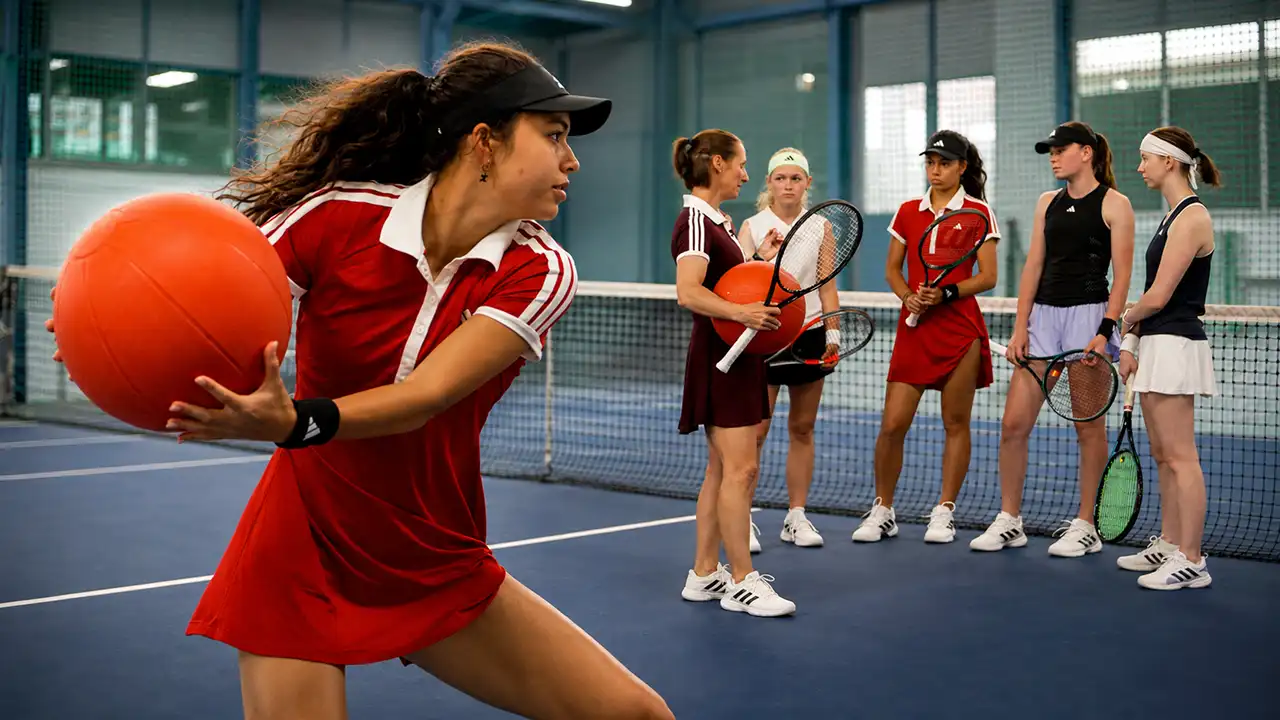
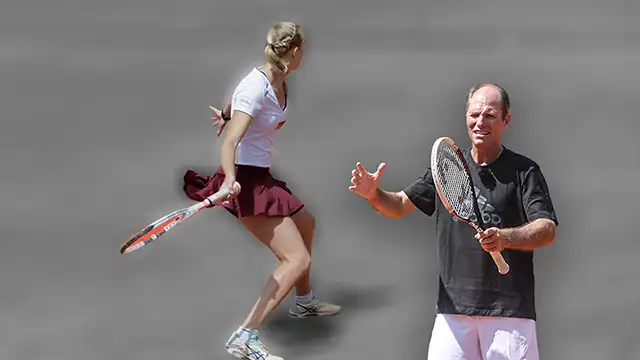
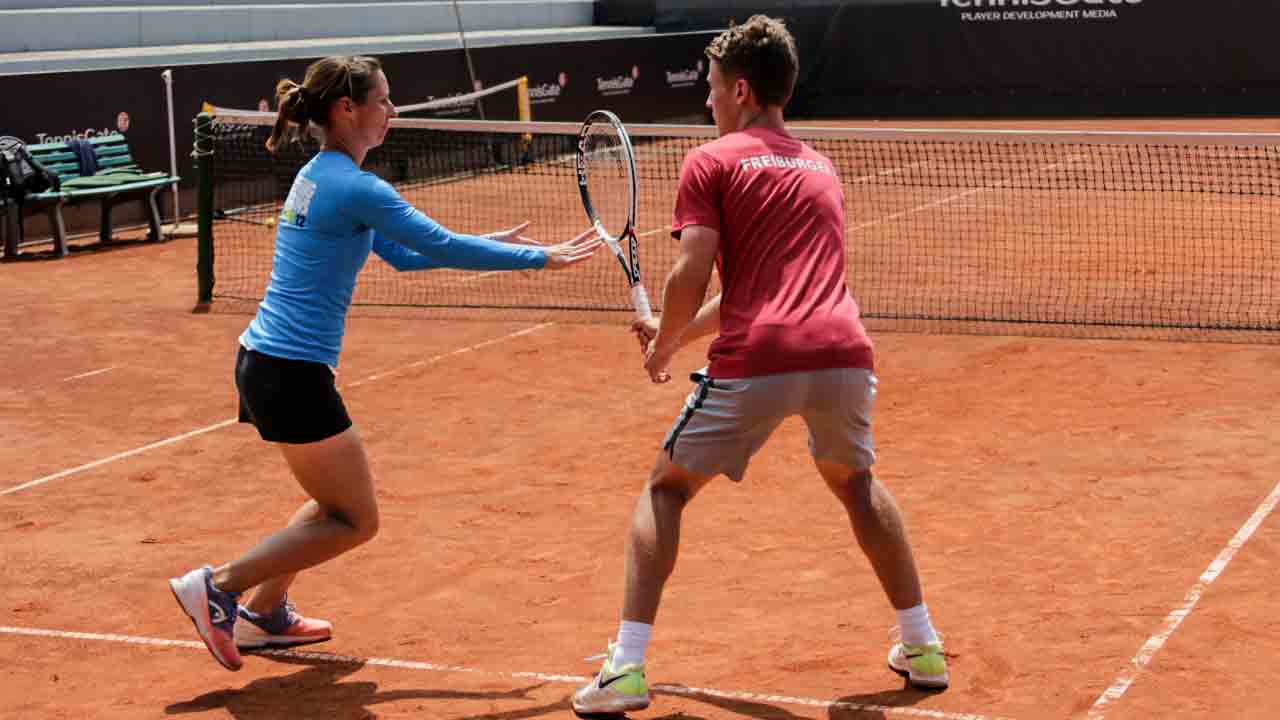
The exercise can be done in a group, in rows, or as a partner drill. The partner version is especially useful: one player takes the role of the coach and gives clear commands, while the other works as the player. Then the roles are switched.
Transfer Logic to Tennis
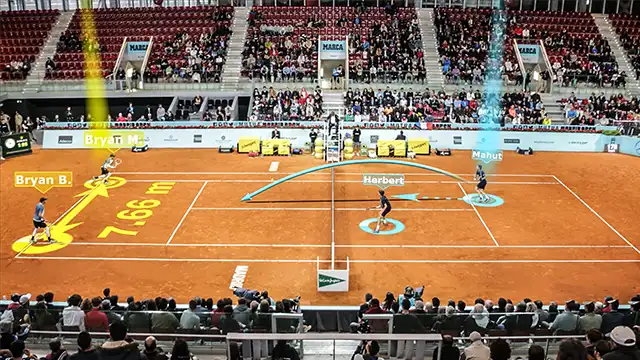
Tennis is a game of perceiving, deciding, and moving. Before every stroke, players must read the situation, choose the right response, and get the body into a good starting position in time.
That exact connection is addressed in the exercise “Happy Feet with Shadow Strokes.” The quick foot contacts activate the body, the commands demand attention and reaction, and the shadow strokes prepare typical movement patterns that are needed directly in match play.
The exercise is especially useful shortly before a match or before an intense training format. It gets the players into an active physical and mental state. At the same time, it creates a clear link to real match situations: forehand, backhand, volley, and overhead are not thought of in isolation, but are called up from a moving, reaction-based starting position.
Training Goal
The goal of the exercise is to activate the players immediately before a match or before an intense training phase.
The focus is on:
- quick, active footwork
- reaction ability to acoustic commands
- mental preparation for typical stroke patterns
- connection between footwork and stroke imagery
- concentration and attention under light cognitive load
- clear communication in the partner or group format
The exercise is not technique training in the narrow sense. Rather, it serves to combine movement readiness, concentration, and stroke preparation.
Load Management
The exercise should be done briefly, intensely, and with focus. It is especially effective when movement quality stays high.
Recommended load:
- 2–4 rounds per player
- 15–30 seconds of work per round
- 30–45 seconds rest between rounds
- in partner format: each player once as coach, once as player
- before the match, keep it short and activating
- in training, also usable as a repeated reaction form
Intensity is controlled through the speed of the commands, the number of stroke options, and the length of the work phase.
For younger or less experienced players, the exercise should start with just a few commands and a clear sequence. Advanced players can work with faster changes, random order, and more complex stroke combinations.
Possible Corrections
The feet are not active enough
The player should not stand still between strokes. After each shadow stroke, she immediately returns to small, quick foot contacts.
The stroke movement becomes too big or too slow
The shadow strokes should be clearly recognizable, but compact. The goal is not maximum backswing movement, but quick activation and a clean movement image.
The center of gravity is too high
The player should stay slightly bent in the knees and take on an athletic stance. That way, she is ready for the next action more quickly.
The commands are unclear
In partner format, the coach has to call out loud, clearly, and distinctly. That is also an important training component: whoever gives commands must know what he or she wants.
The player reacts in a rushed rather than controlled way
Speed matters, but the movement should stay stable. The goal is a quick, controlled reaction – not uncoordinated hectic movement.
The strokes are performed without any connection to footwork
The shadow stroke starts out of active feet and ends again in active feet. That exact connection makes the exercise tennis-specific.
Coaching Keys
Active feet as the base
The players stay in motion all the time. Small, quick contacts keep the body alert and ready to react.
Recognize quickly, react clearly
The command must be processed immediately and transferred into the matching stroke movement.
Execute shadow strokes compactly
The strokes are technically clean in outline, but not played in an exaggeratedly large way.
After every action, return immediately to readiness
After forehand, backhand, volley, or overhead, go straight back into the active basic movement.
Activate head and body at the same time
The exercise challenges not only the legs, but also concentration, classification, and decision-making ability.
Clear communication in partner format
The coach gives clear commands. The player reacts quickly and in a controlled way.