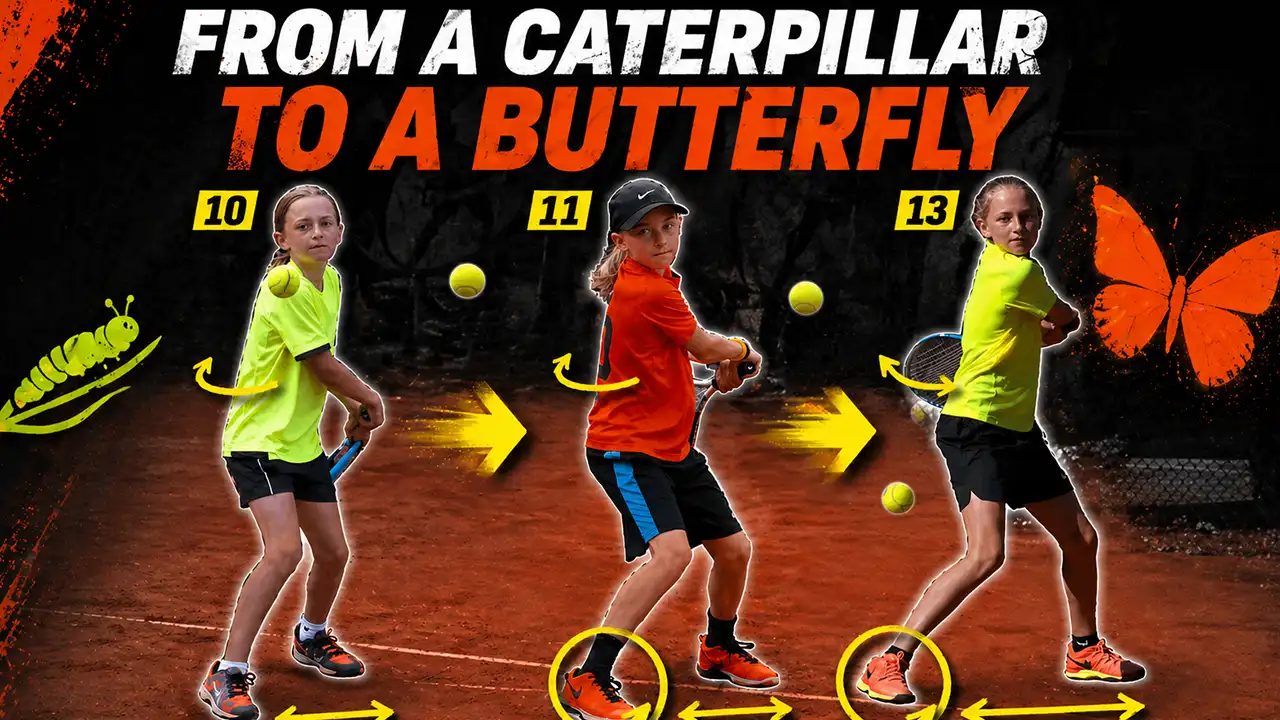
From a caterpillar to a butterfly – two-handed backhand
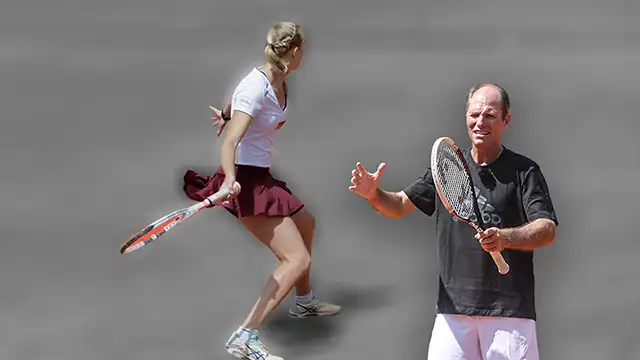
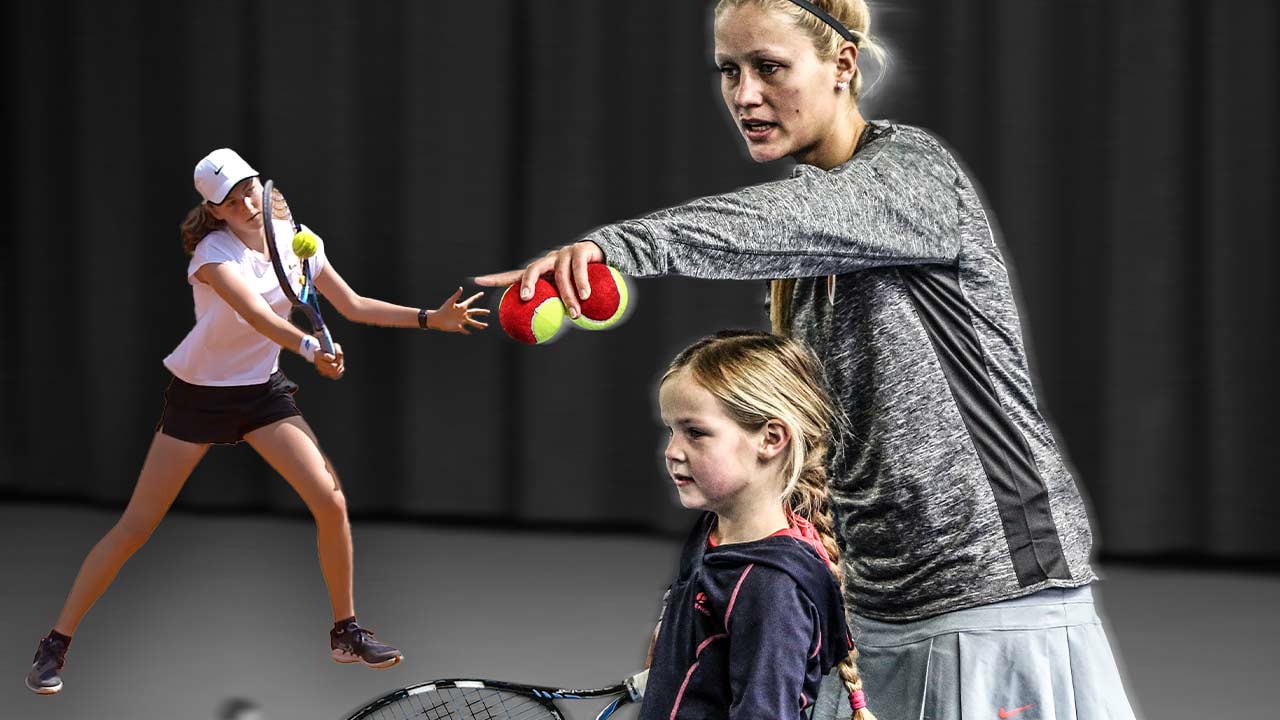
In this analysis, we superimposed the same player on a two-handed backhand in three age groups – 10, 11 and 13.
From a caterpillar to a butterfly – two-handed backhand Read More »

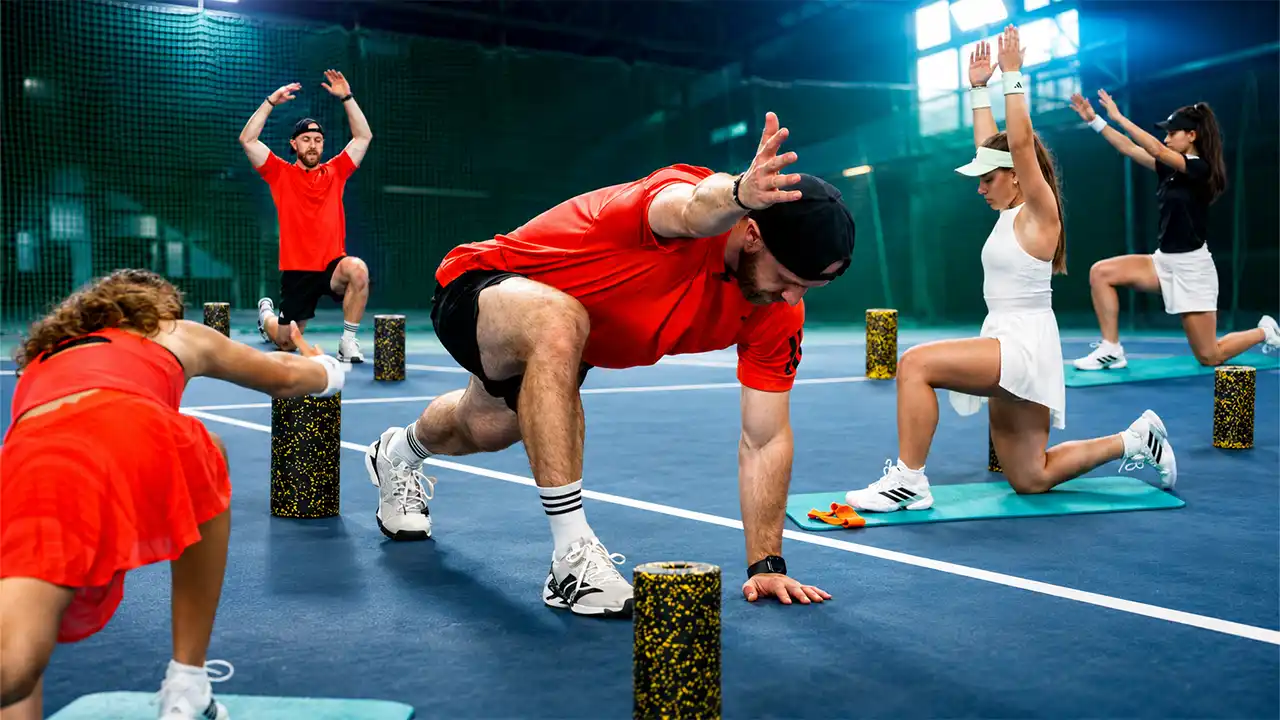
Active mobility in a half-kneeling position: mobilize hips, trunk and shoulder while building stability for tennis strokes at the same time.
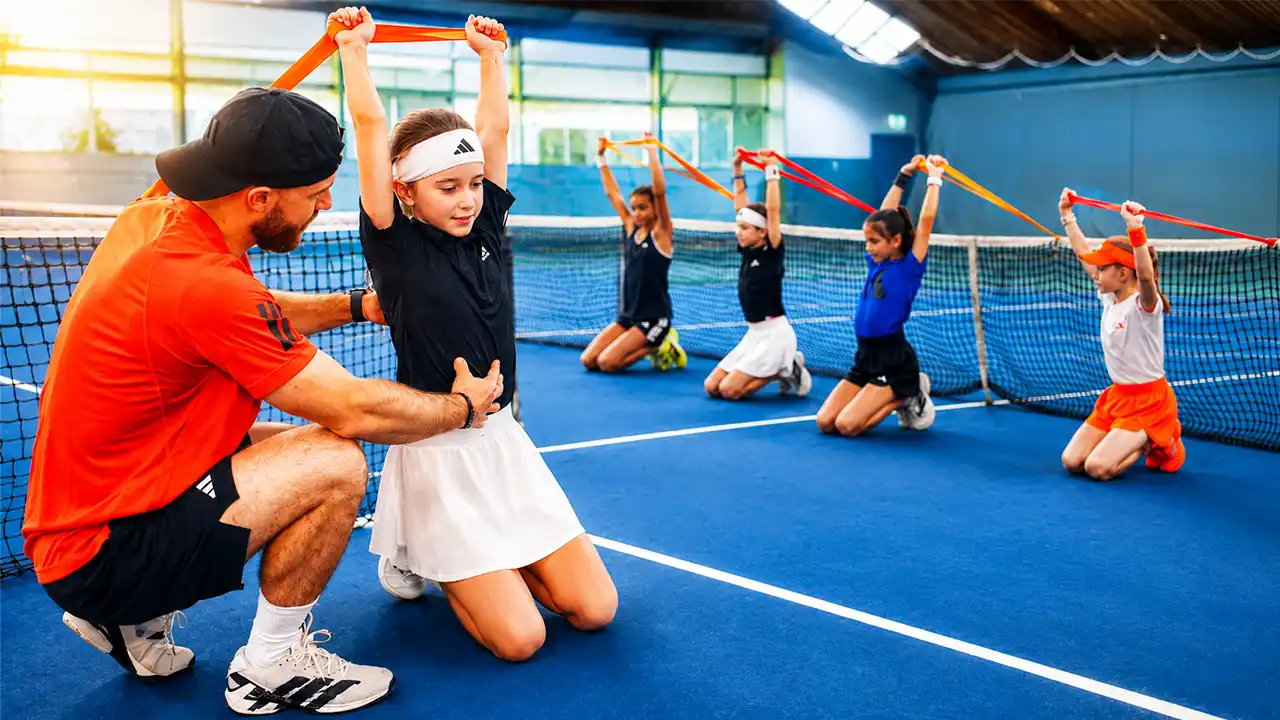
Recline with band: a controlled mobility exercise for shoulder mobility, core stability, and overhead movements in tennis.
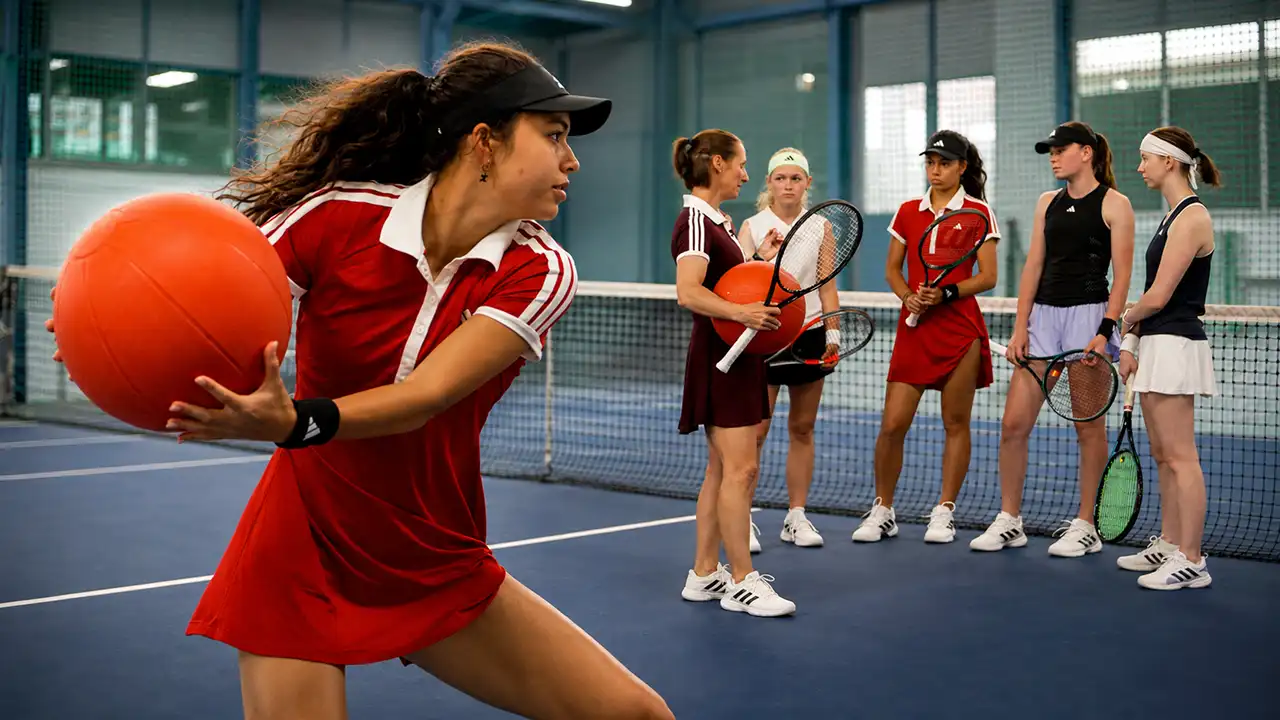
Intense medicine ball warm-up for footwork, rotation, reaction and tennis-specific transfer.
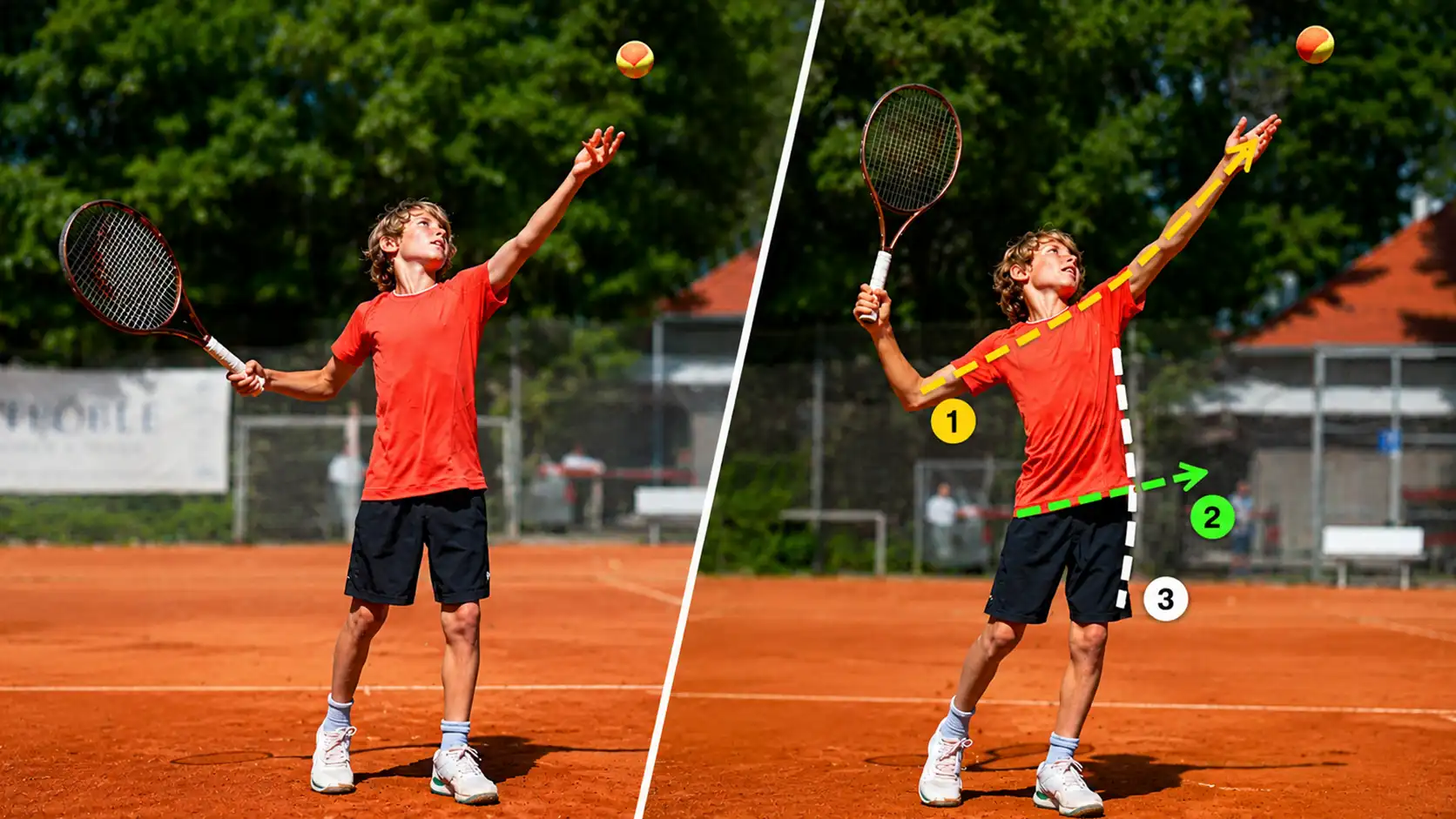
Detailed analysis of serve technique in the Orange stage, with in-depth comments and coaching keys for developing young players.
Control stroke overhead: players train high volleys, quick high-low adjustments and greater confidence in net play.
In this analysis, we superimposed the same player on a two-handed backhand in three age groups – 10, 11 and 13.
From a caterpillar to a butterfly – two-handed backhand Read More »

Let’s look at the comparison in the female age group u14 to u16. Both players have different grip positions on the two-handed backhand.
Differences in holding the grip for the two-handed backhand Read More »

The path of the ball is a resutl of the angle of the swing, the racquet head at contact and the speed of the racquet. here we can cleary see that in order to hit a high ball with ample spin, the racquet head has to drop considerably under the ball and swing up in a very steep angle.
High Defensive One Handed Topspin Backhand Read More »

In this demonstration we see a player hitting a one handed topspin backhand. The bird view perspective allows us to see a clear circular swing, the use of the forearm, the contact point in front of the body and the way the racquet head accelerates.
One-Handed Topspin Backhand with a Closed Stance (Bird View) Read More »

In this clip the player backs up far behind the baseline and hits a high defensife topspin shot. The racquet path drops quickly from a position above the shoulders to around knie height. The wrist is fully involved extending towards the small finger. From there the racquet head moves steeply upwards to and beyond contact aided by the wrist. The contact point occurs slightly below the shoulders.
Two-Handed Topspin Backhand Swing Path Read More »

An interesting trayectory of the racquet head on a slice backhand lob. The racquet moves down to the ball and consinues moving down even after conteact before starting to move up. What creates the upward momentum of the ball is the open racquet head at contact.
The Open Racquet Head in the Backhand Lob (Swing Path) Read More »

In this demonstration, our player hits a one-handed topspin backhand. The camera follows from the back allowing us to see in more detail how the player lines up behind the ball and how he uses his upper body rotation in the swing,
One-Handed Topspin Backhand Read More »

In the front view we can clearly see that even on a high contact backhand the wrists and forearms play an important role as the racquet head drops below the contact point on the backswing before driving up and through contact. The swing has a definite circular component as the racquet swings around the body. The arms remain relaxed and extended.
Two-handed Backhand High Contact Point (Front view) Read More »

When the opponent’s ball is coming high and deep it is sometimes necessary to back up and hit a defensive shot back. However, the tactical goal is to hit a good enough shot to prevent the opponent from attacking. A high, deep shot with heavy topspin with usually do the trick. Let’s take a look at how this is done.
One-handed Backhand Topspin Lob Backing up (Sideview) Read More »

One of the most difficult shots to hit for a player with a one-handed backhand is high bouncing ball. This shot requires the player to swing around the body to generate circular momentum and catch the ball at shoulder level. The player has to hit the ball away from the body using the forearm to generate racquet head speed. Here are the key technical elements of this shot.
One-handed Topspin Backhand at Shoulder Level (Sideview) Read More »

When at the net in doubles angle the short lobs and hit deep lobs through the middle or at the opponent’s feet. A good topspin lob requires great racquet acceleration and hat is not easy with a one handed backhand. To accomplish this successfully, the player has to rely on his/her forearm to accelerate the racquet head to contact. Here are some important technical considerations in the execution of this shot.
One-handed Topspin Backhand Lob (Sideview) Read More »

A good lob is an essential tool for any tennis player. A defensive lob at the right time or an offensive lob when unexpected can change the momentum of the point. Adding slice to a lob will provide the player with extra control. The one handed slice backhand lob is very similar to the slice groundstroke except for the steeper trajectory of the racquet head. Here are some key guidelines to execute this shot effectively.
One-handed Backhand Slice Lob (Sideview) Read More »

Sometimes during a point the player will not have time to move back and will have to hit a ball right of the bounce. This shot requires a very short backswing and the use of the forearm to square the racquet head to contact. Let’s take a look at the key technical aspects of a one-handed off-the-bounce shot.
One-handed Off-the Bounce Backhand (Side view) Read More »

A drop shot at the right time is a wonderful way of disrupting the opponent’s rhythm. An effective drop shot will have some slice to force the ball to “die” after the bounce. Ideally it will be hit softly and with finesse so that it lands close to the net. However, the most important aspect of an effective drop shot is the element of surprise. The ability to fake a hard shot and then hit a drop shot is really the key to success. Let’s see how this is done.
Two-handed Backhand Drop Shot Disguised (Front View) Read More »

This video of the one-handed slice backhand approach from the back show clearly how the racquet head moves high to low and across the body. It also shows how the player remains sideways as he moves through the shot towards the net and only faces the net after he has executed the shot.
One-handed Backhand Slice Approach (Back view) Read More »

This bird view of a disguised drop shot allows us to take a close look at the moment the player changes the swing from a two-handed drive to a slice. When executed correctly this maneuver allows the player to fake a penetrating drive and change it at the last moment to a short slice or drop shot. Let’s take a look.
Two-handed Backhand Drop Shot Disguised (Bird view) Read More »

Here we see a player hitting a one handed slice backhand. The camera is straight over him and allows us to observe the angle of the racquet head throughout the swing. As you can see the racquet head starts open, closes to contact and opens up again.
One-handed Backhand Slice with a Closed Stance (Birdview) Read More »

In this demonstration, our player hits a one-handed topspin backhand. The camera follows from the front allowing us to in more detail how the player lines up behind the ball and how he uses his upper body rotation in the swing. From this angle we are also able to see how the racquet swings forwards and around and how the racquet head accelerates during the swing, first lagging behind the hand, catching up at contact and then leading the follow through.
One-handed Backhand with a Closed Stance (Front View) Read More »

Here we see a nice example of a two handed player disguising a one-handed drop shot. The player sets up as if driving through the ball and changes the path of the racquet at the end of the backswing.
Two-handed backhand dropshot disguised (Back view) Read More »

In this demonstration, our player hits a one-handed topspin backhand. The camera follows from the side allowing us to see in more detail exactly where the player makes contact and the path of the racquet through contact. From this angle we are also able to see how the wrist and forearm work to accelerate the racquet head up, forward and around.
One-handed Backhand with a Closed Stance (Side View) Read More »

At times players will have to back up to defend against a high deep shot from the opponent, especially on clay. Ideally the player will move back quickly using side steps or cross over steps. He then will try to stop the momentum and hit while moving forwards or at least in a neutral position. Ideally the player will hit a high, deep heavy shot back. Let’s take a look at some key aspects of this shot!
Two-handed Backhand with a Closed Stance, Defensive (Front view) Read More »

In this video we will analyze a one-handed backhand where the player has to back up. From this frontal camera angle we can clearly see how the player moves sideways to get in position and then swings up and around to hit a deep, heavy, high shot back. An important characteristic of this shot is the steep upward swinging path and the aggressive rotation of the forearm.
One-handed Backhand Backing Up Read More »

More and more in modern tennis players are hitting their backhands with an open stance, especially those with a two-handed backhand. However, when the player is moving forwards or if the player has time to get behind the ball, a closed stance is still very effective. Interesting to notice in this perspective is the rotation of the hips as the player hits. Even though the player hits with an open stance he rotates through the shot and ends up facing the net.
Mastering Open vs. Closed Stance on the Backhand Read More »

In this demonstration, our player hits a one-handed topspin backhand. The camera follows from the back allowing us to see in more detail how the player lines up behind the ball and how he uses his upper body rotation in the swing, From this angle we are also able to see how the racquet moves behind his body, dropping under the ball in the first part of the forward swing and then moving around the body from low to high.
One-handed Backhand with a Closed Stance (Back View) Read More »