
More Than Just Lob and Smash: Game-Based Net Play Warm-Up
Overhead and volley warm-ups are an essential part of a complete tennis-specific preparation. However, this drill intentionally integrates far more dynamics and game realism than the traditional “lob and smash” exercise performed in a static line.
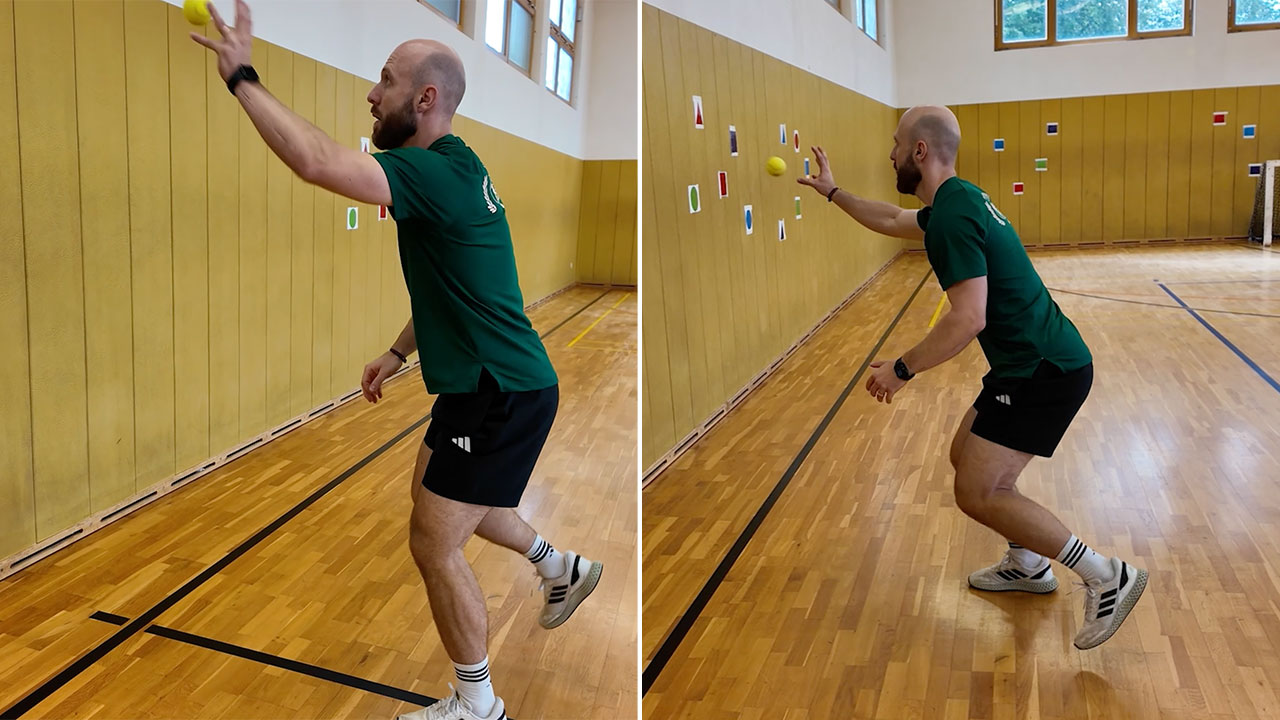
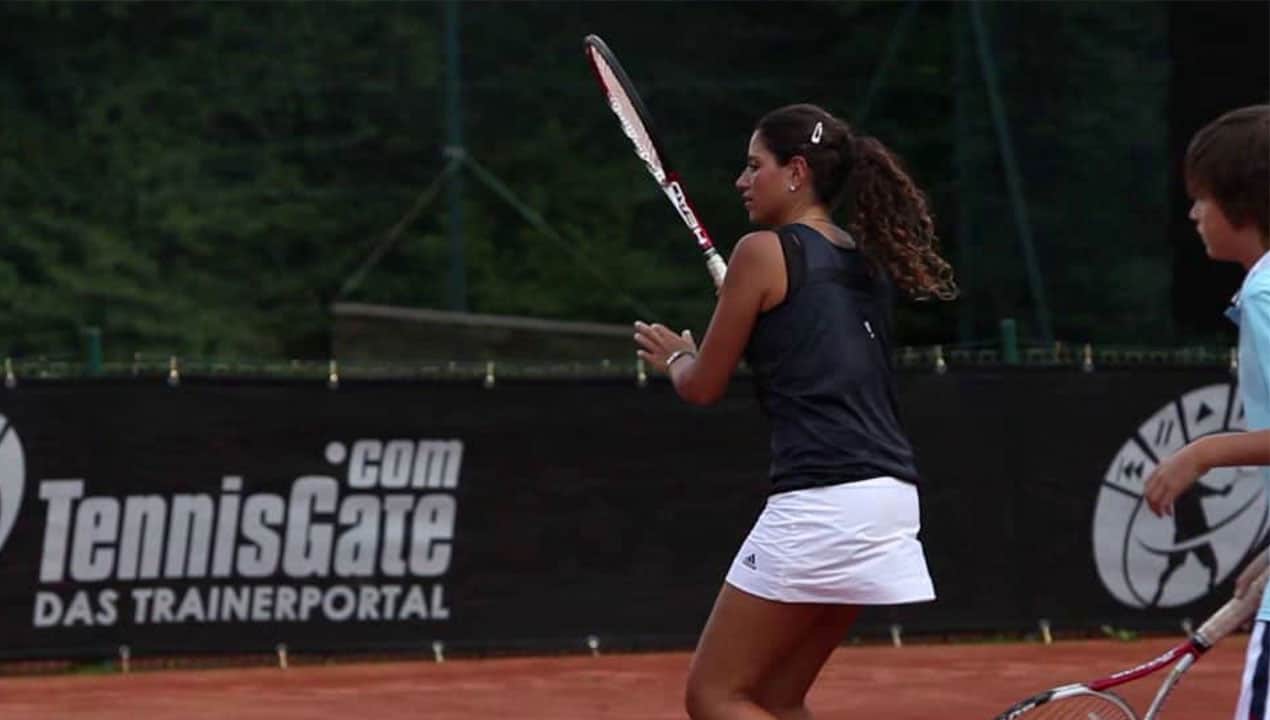
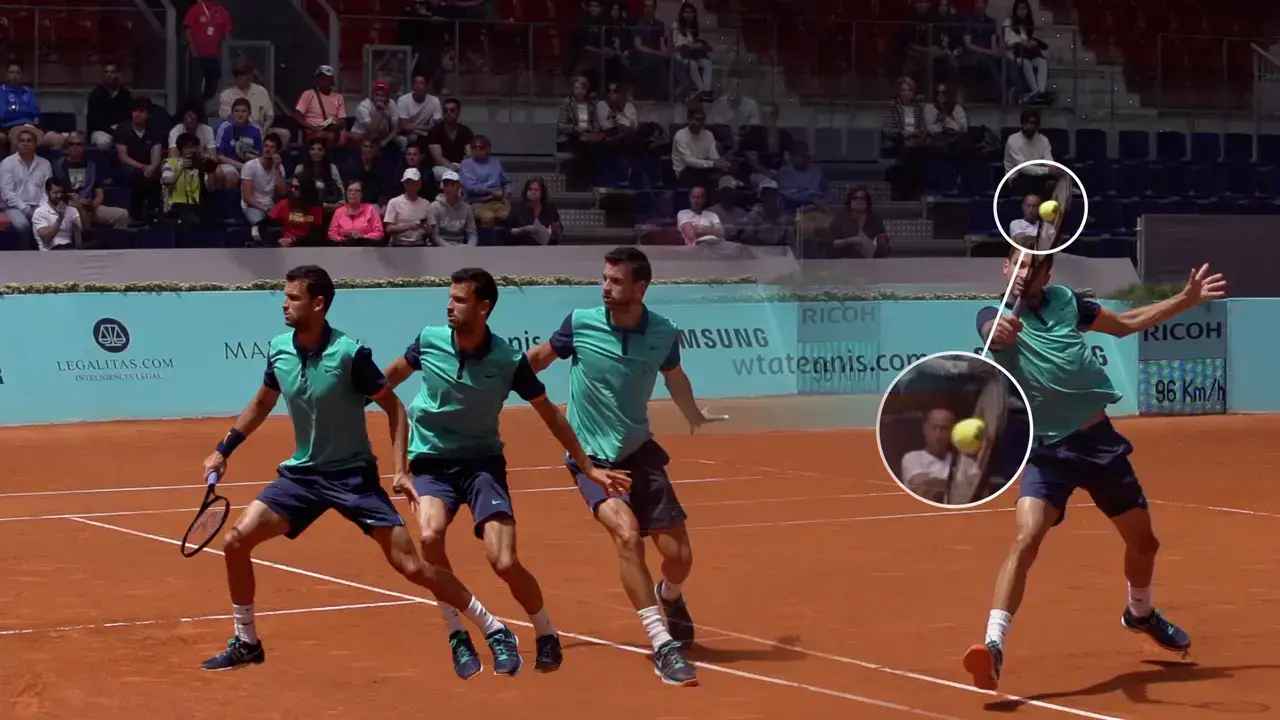
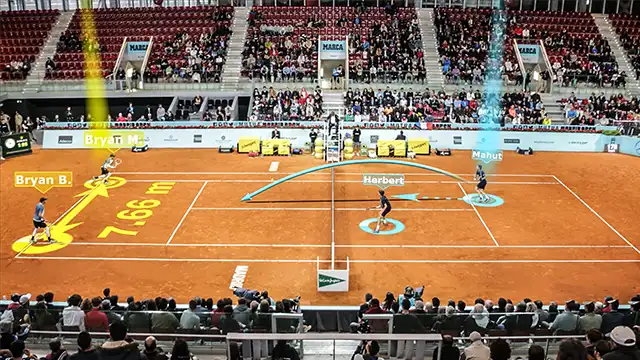
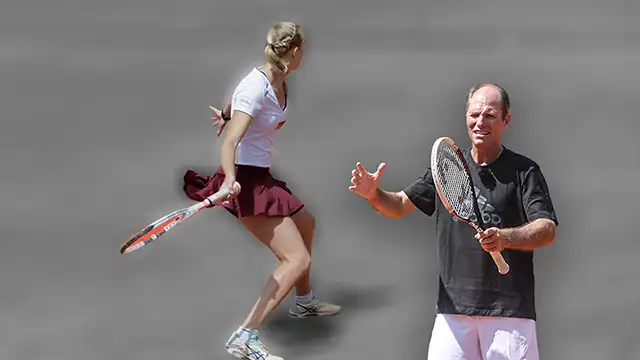
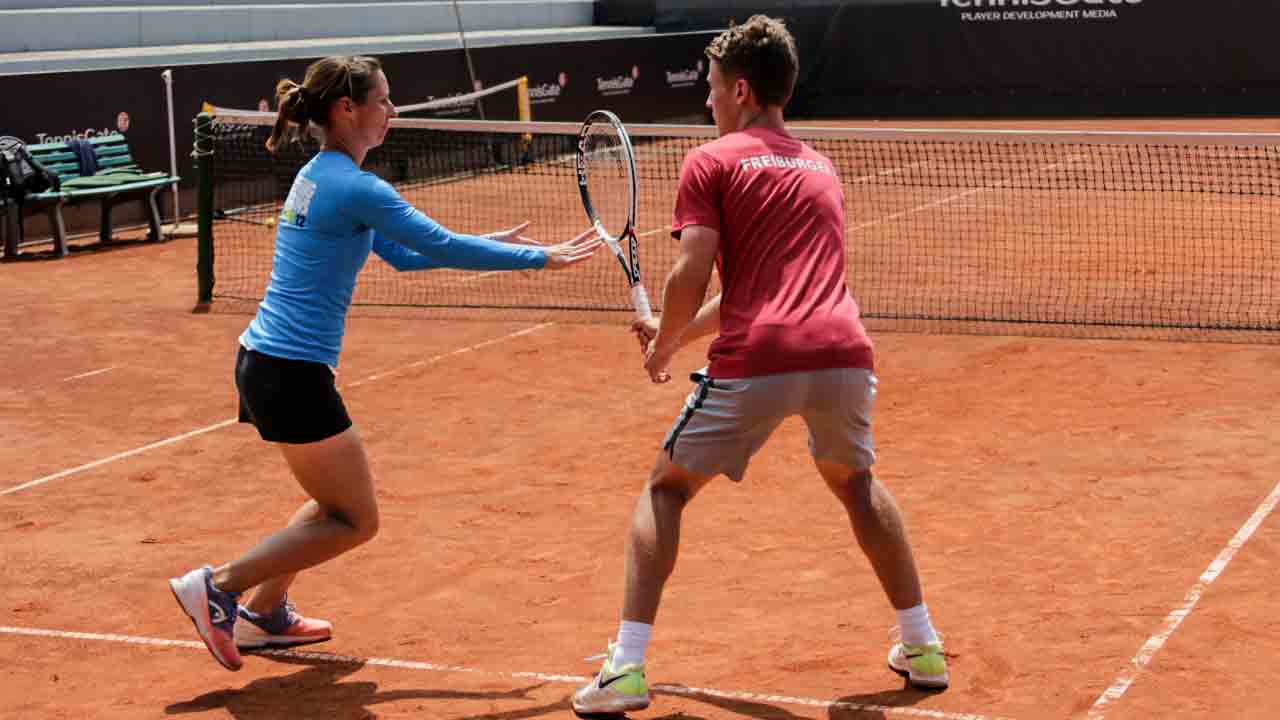
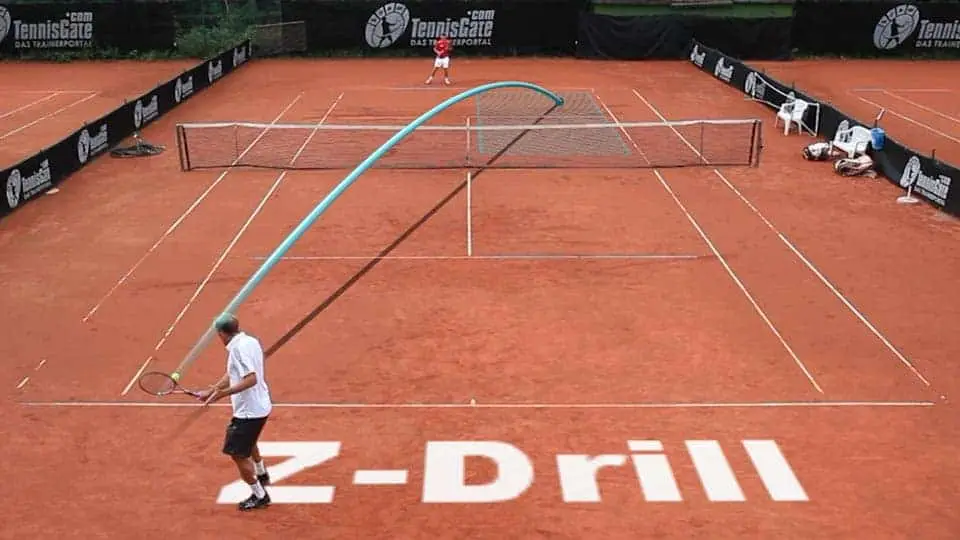
The player at the baseline starts the drill with a playable lob for the overhead. The net player moves backwards, actively positions herself underneath the ball, and executes a controlled overhead. Immediately afterwards, the baseline player reacts with a return-like topspin movement and plays the ball low or controlled back to the net player for the next volley. The next lob-overhead situation follows immediately after.
Through this continuous transition between backward movement, forward action, and rapid reaction, the exercise creates a highly game-realistic warm-up situation with constant movement activity. At the same time, the baseline player repeatedly trains return-like stroke patterns under time pressure — a movement pattern players can hardly get enough repetitions of in modern tennis.
Training Goals
- Improve overhead coordination while moving
- Develop dynamic forward and backward movement at the net
- Create an active transition from the overhead into the next net action
- Train reactive topspin returns after the opponent’s overhead
- Improve rhythm, timing, and ball control during the warm-up
- Activate tennis-specific movement patterns before practice or matches
Coaching Keys
- Move backwards early and actively get underneath the ball
- Play the overhead with control and stability rather than maximum power
- Re-establish forward positioning immediately after the overhead
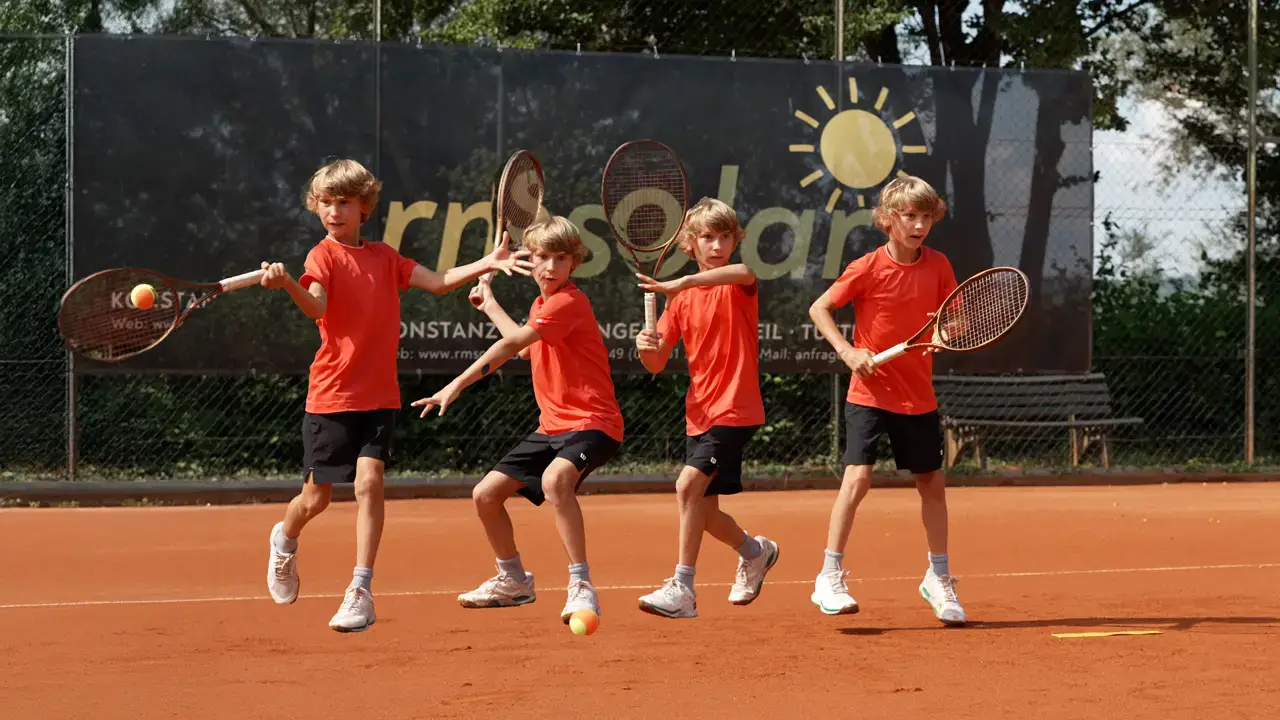
- Execute the return movement compactly and explosively
- Recover into an active ready position after every shot
- Maintain continuous footwork without “standing still” between actions
Key Education Factor
The central learning factor of this exercise lies in combining coordinated movement control with immediate shot preparation following the previous action. Players learn to remain operational after explosive movements and continuously reorganize themselves — a key ability that strongly influences consistency and quality during fast-paced rallies in modern tennis.
Progressive Approach
Step 6
Execution under time pressure or with target zones for overheads and volleys. Focus on precision under dynamic load.
Step 1
Controlled lob-overhead rhythm without volley continuation. Focus on positioning and clean overhead technique.
Step 2
After the overhead, a simple volley is played to the open side. Focus on transitioning from backward to forward movement.
Step 3
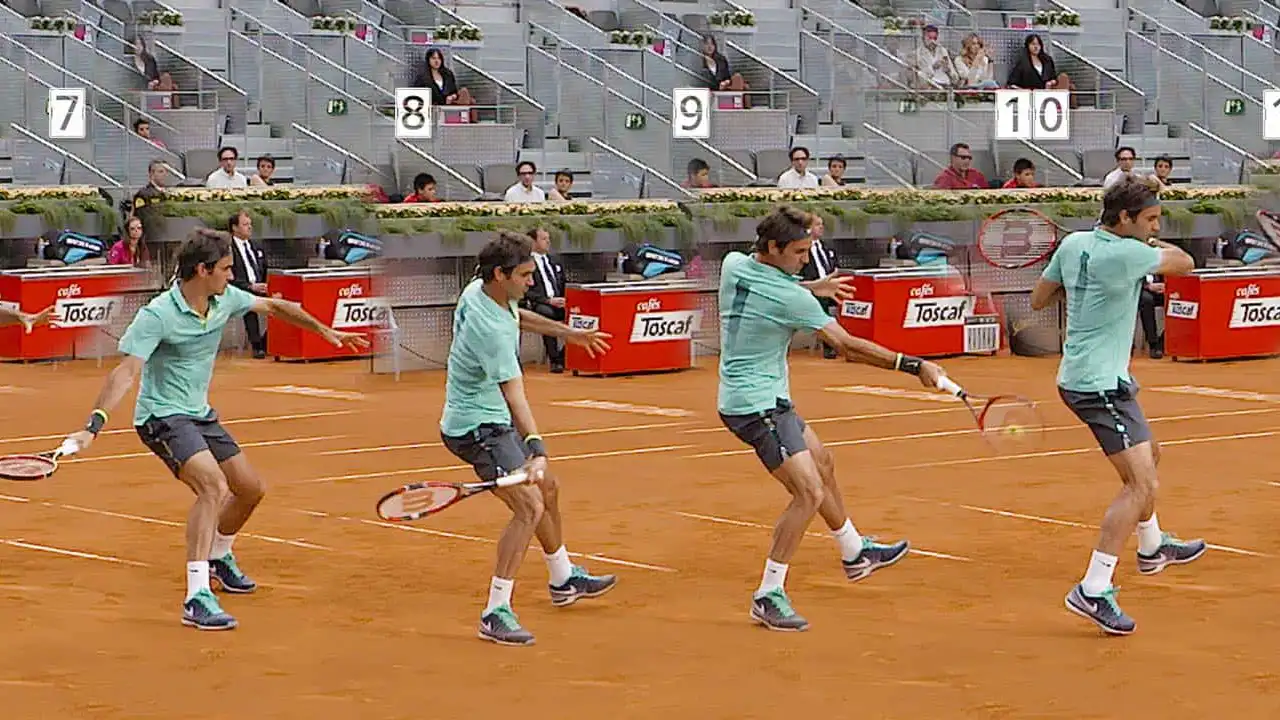
The baseline player reacts after the overhead with a controlled topspin shot to the volley player. Focus on return-like stroke mechanics.
Step 4
The net player actively varies between overhead and first volley placement. Focus on quick reorganization and footwork.
Step 5
More open rally continuation after the overhead and first volley. Focus on decision-making and game realism.